
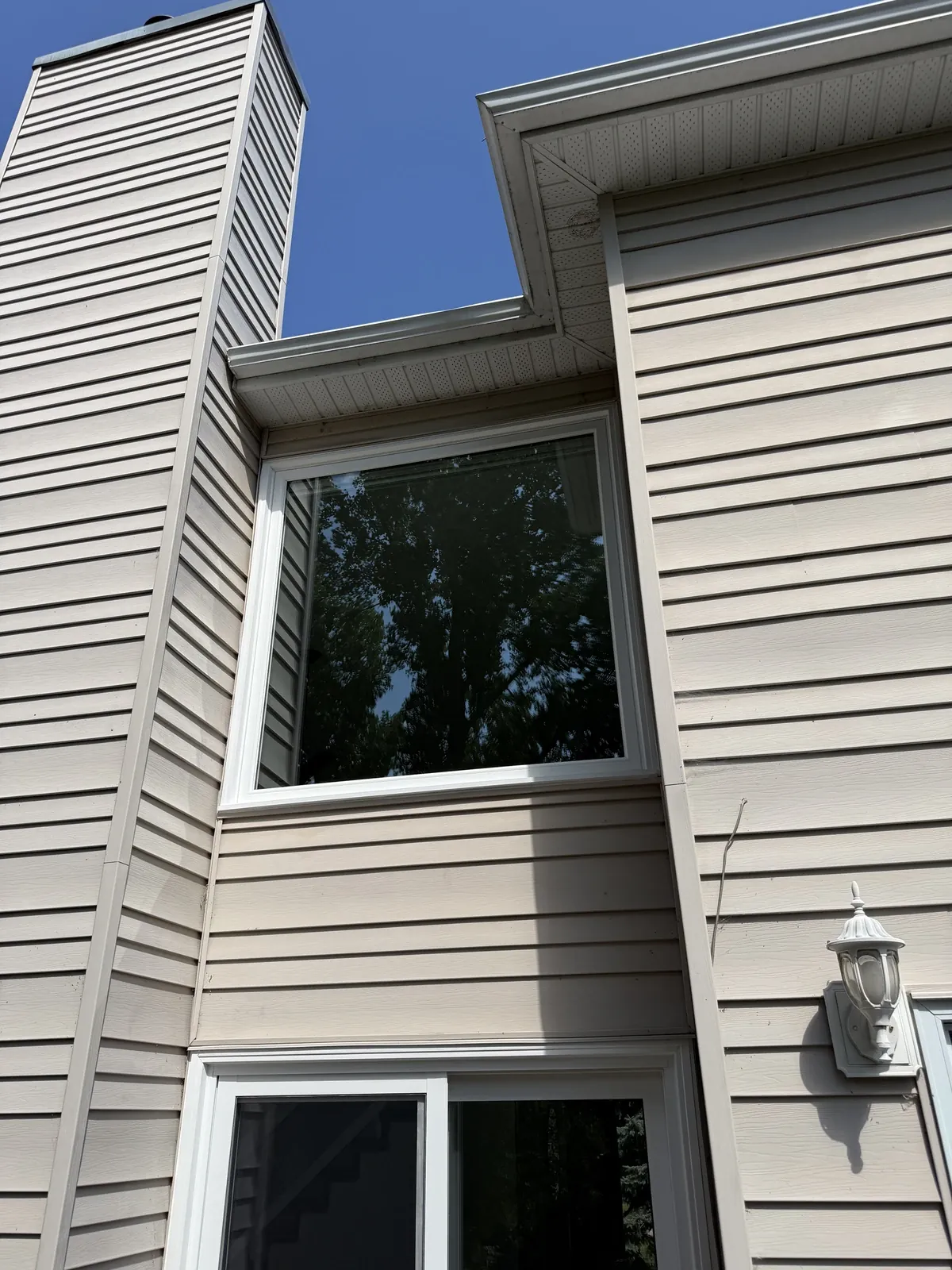
Energy efficient windows and doors make a cold house more comfortable, but they are only one of the places an older Manitoba home loses heat. Federal figures put windows, doors and skylights at up to 25 to 35% of a house’s heat loss, depending on the source, with the basement at about 25% and the walls at about 20%. Here’s where the heat goes, what new windows and doors can and can’t fix, what to do first on a budget, and what “energy efficient” means for a window, a front door and a patio door.
The short answer
- Windows and doors are a big share, not the whole story. They can account for up to 25 to 35% of a house’s heat loss, depending on the source. The basement can account for about 25% and the walls about 20%, and air leaks run through all of them.
- Seal air leaks first. The federal guide Keeping the Heat In calls air leakage control “the single most important retrofit activity,” and caulk and weatherstripping cost little.
- Then replace the worst openings, not all of them. Single-pane or fogged windows, a front door that no longer seals and an old patio slider come first.
- “Energy efficient” has a definition. In Canada it means ENERGY STAR certified: a U-factor of 1.22 or lower, or an Energy Rating of 34 or higher. In Manitoba, add triple-pane glass, which the rebate requires.
- Expect comfort first and payback second. New windows and doors cut drafts, cold glass and condensation right away. The energy savings are real but slow to repay the cost.
Where an older home loses heat
Heating is the big item on a Manitoba energy bill: Efficiency Manitoba says it can account for nearly 60% (Efficiency Manitoba). The federal guide Keeping the Heat In gives figures for several of the places heat escapes:
| Where | Share of heat loss | The usual fix |
|---|---|---|
| Windows, doors and skylights | Up to 35% | Weatherstrip and caulk the sound ones; replace the worn-out ones |
| Air leakage, all over the house | No figure given | Caulk, weatherstripping, and sealing holes into the attic and at the top of the foundation |
| Basement | About 25% | Insulate the foundation walls; seal or replace leaky basement windows |
| Walls | About 20% | Add insulation, most practical when you re-side or renovate |
| Attic | No figure given | Seal the leaks through the ceiling, then top up the insulation |
Read the table as a guide, not a pie chart. Each figure is what that part can account for in a typical house, not a measurement of yours, and the parts overlap: air leakage, for one, happens at windows, doors, the attic and the basement alike. Two details are worth noticing:
- The attic isn’t always the biggest loser. The guide notes that the attic is a favourite place to start because it’s easy to reach, even though “most other areas, such as basements and uninsulated walls, lose more heat than the typical attic.”
- Windows lose far more than their size suggests. A single-glazed window loses about 10 to 20 times as much heat as the same area of properly insulated wall, so a few bad windows can lose as much as a whole wall.
ENERGY STAR Canada puts windows, doors and skylights lower, at up to 25% of a home’s energy loss (Natural Resources Canada). Either way, your own house will differ. An EnerGuide home evaluation, which includes a blower-door test for air leaks, shows where yours loses heat. Efficiency Manitoba’s brochure lists a $400 rebate toward a pre-retrofit EnerGuide evaluation; check the current offer with Efficiency Manitoba before you book.
What new windows and doors can and can’t fix
Energy efficient windows and doors fix what happens at the opening itself:
- Heat passing through the glass, the frame and the door slab. This is what the U-factor measures.
- Air leaking past a worn sash or door seal, and around the frame, if the gap is insulated and sealed when the new unit goes in.
- The “draft” that isn’t a leak. Room air cools against cold glass and sinks to the floor. The guide says these currents “are often misinterpreted as air leaks around windows.” Warmer inside glass weakens them.
- Condensation and frost on the glass, which new windows reduce but don’t eliminate.
- A door or slider that has gone out of square and no longer meets its weatherstripping.
They won’t fix what happens elsewhere:
- Leaks into the attic and at the top of the foundation. Large leaks are common in both places.
- Uninsulated walls or basement walls. A new window in a cold wall is still in a cold wall.
- High indoor humidity. New windows are tighter, and the guide warns that humidity can rise after they go in. Keep it around 30% in cold weather: see how to stop window condensation.
Not sure whether your windows are the problem? See the signs your windows are raising your heating bill.
What to do first on a budget
If the goal is a lower heating bill for the least money, this is the order most houses reward:
- Find the leaks. On a cold, windy day, an incense stick held near window sashes, door edges and the attic hatch shows where air moves. Our guide to drafty windows has the method.
- Seal them. Keeping the Heat In says air leakage control “should be considered first in any upgrade strategy.” Caulk and weatherstripping work on the windows and doors you’re keeping, too: see drafty front door fixes.
- Do the attic. Seal the holes through the ceiling, then add insulation. It’s the easiest part of the house to reach.
- Price the basement. Efficiency Manitoba calls insulation with air sealing one of the most cost-effective ways to cut energy bills, and its insulation rebate covers attics, walls and foundation walls.
- Replace the worst windows and the front door. Start with single-pane glass, fogged or rotten windows, anything that won’t close tight, and a door you can see daylight around. Rooms you sit in every evening come first.
- Finish the rest when the budget allows. If you plan to do every window soon, ask for a whole-house price: we give a volume discount when you quote the whole house.
One caution before a big air-sealing job. A tighter house leaves less air for a gas furnace, water heater or fireplace, and the guide warns that a starved chimney or flue “could spill dangerous gases into the house.” Have a heating contractor check your appliances, and keep working carbon monoxide alarms.
What makes a window energy efficient
For a window, the term has a test behind it. ENERGY STAR Canada certifies a window when its U-factor is 1.22 W/m²·K or lower, or its Energy Rating (ER) is 34 or higher, and its air leakage is no more than 1.5 L/s·m² (ENERGY STAR Canada specification). NRCan says a certified window is about 20% more energy efficient than the average window.
The U-factor is how fast heat escapes, so lower is better. The ER balances heat loss against free heat from the sun and air leakage, so higher is better. Our guide to U-factor, ER and ENERGY STAR shows how to read both on a label.
What gets a window to those numbers is a short list: three panes of glass, Low-E coatings, argon gas, warm-edge spacers, an insulated frame and tight seals. We explain each in Low-E glass, argon and four more window upgrades. Every window we install is triple-pane with Low-E glass and argon, ENERGY STAR certified and made in Canada.
What makes an entry door energy efficient
A door is judged by the same ENERGY STAR numbers as a window, and NRCan says a certified door is about 15% more efficient than an average one. Here is a door cut through its edge, seen from above:
- The skin. On our doors it’s steel.
- The foam core. This is the insulation. Keeping the Heat In says insulated-core doors “are more thermally resistant than solid material doors and doors that include glazing.” Our Novatech doors have a polyurethane foam core.
- The edge of the door, which has to stay straight to meet the seal from top to bottom.
- The weatherstripping. A hinged door closes against a compression seal, which NRCan gives as the reason hinged doors are usually more airtight than sliding ones. Ours have compression weatherstripping and compression corner seals.
- The frame. We replace the door and its frame together, so the new door closes into a square frame. See slab vs pre-hung doors.
- Insulation and air sealing between the frame and the wall. You never see it again, and it’s where an installation is won or lost.
Two more parts don’t show in the drawing:
- The bottom of the door. The guide calls it “often a source of major drafts.” Ours have an adjustable sweep and a self-draining sill.
- The glass. A glass insert or sidelite insulates less than the foam-filled door beside it, so more glass means more heat loss. For both the Efficiency Manitoba rebate and Manitoba Hydro’s loan, a door with glass must have at least triple-pane glass. Ask us which doors qualify.
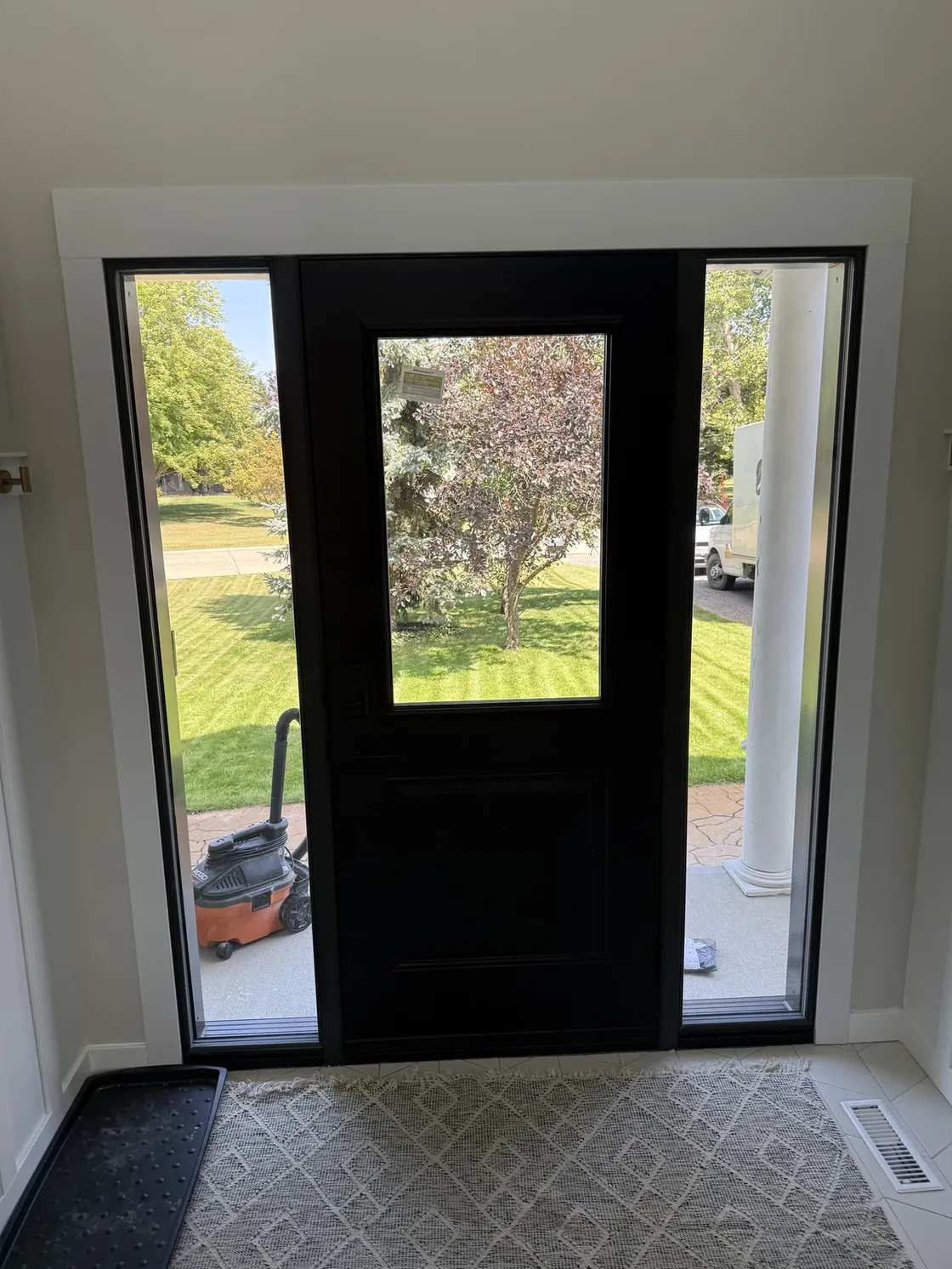
Doors also go out of true. The guide lists “shifting foundations and seasonal warping” among the things that push doors out of square with their frames, and Winnipeg’s clay soil gives foundations plenty of reason to shift. A door that has to be slammed, or shows daylight at a corner, has stopped sealing. For materials, see steel vs fiberglass entry doors.
Patio doors: the biggest piece of glass in the house
A sliding patio door is mostly glass, and its panel has to slide past its seals instead of pressing into them. That makes an old slider one of the weakest spots in many houses. The guide’s advice is to replace worn weatherstripping and hardware, and to replace a sliding door in poor condition with an ENERGY STAR certified one.
The glass does most of the work. Our Novatech 550 sliding door comes three ways: double glazed (ER 35, U-factor 1.65), triple glazed (ER 37, U-factor 1.42), and triple glazed with two Low-E coatings (ER 39, U-factor 1.19). All three clear the Energy Rating line of 34. Only the triple-glazed versions qualify for the Efficiency Manitoba rebate, and only the last also gets under the U-factor line of 1.22.
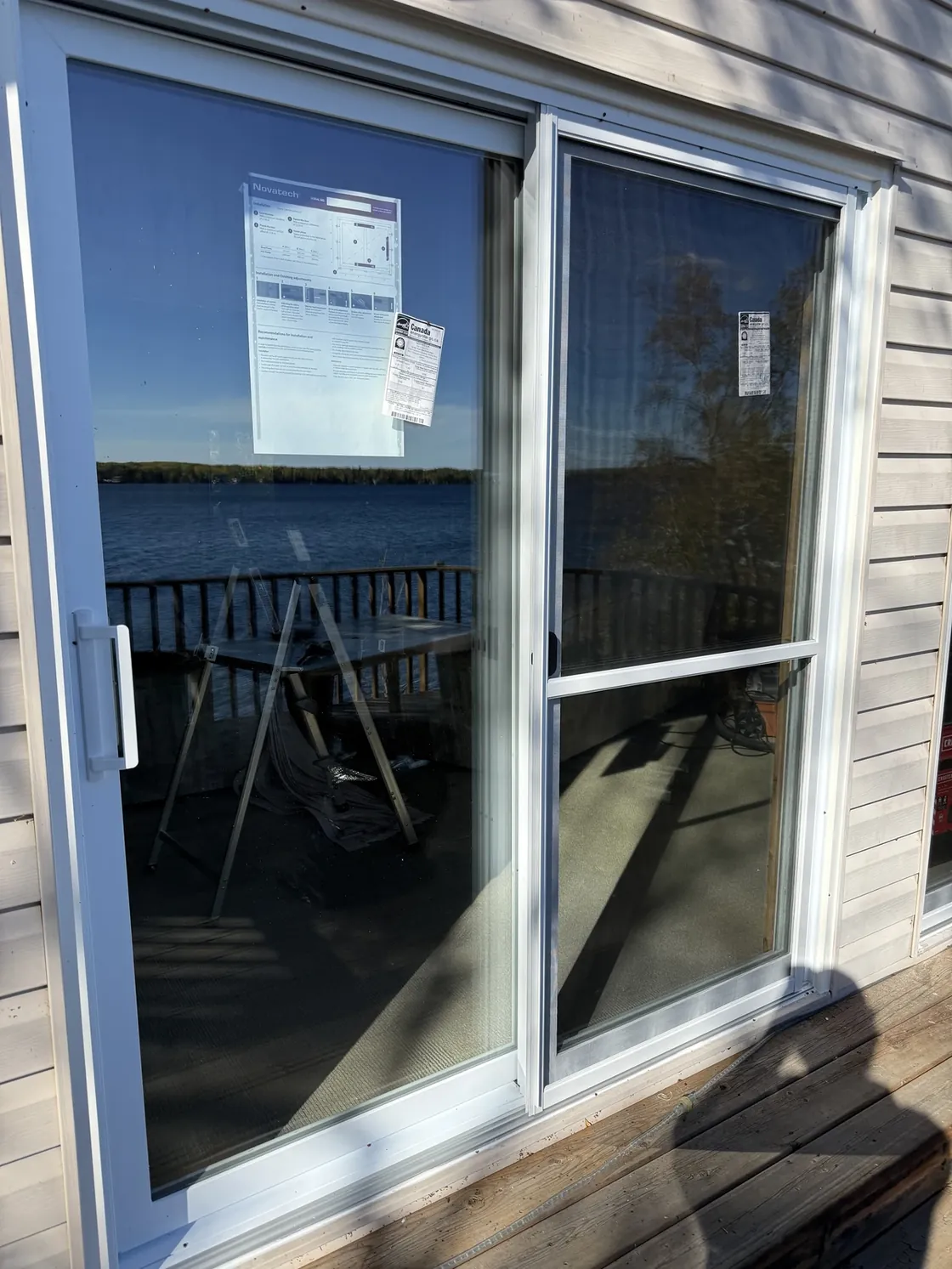
See our patio doors.
Installation: where good products lose their rating
The numbers on a label are measured on the product, not on your wall. Keeping the Heat In says an installation “should provide an airtight, insulated seal,” and warns that a poorly installed product could cause cold drafts or let water leak into the home, “even though the product itself is energy efficient.”
A replacement goes in one of two ways. An insert sets the new unit inside the old frame. A full-frame replacement takes everything out to the rough opening, so the gap around the new unit can be insulated and sealed. The guide says an insert should be done only if the old frame “has not deteriorated and is properly sealed and insulated.” See retrofit vs full-frame installation.
We install with our own crew, not subcontractors, all year. In winter we work one opening at a time, with the room closed off, and each window is insulated and sealed the same day. If we find rotten wood under a window or a door sill, we replace it at no charge. See how winter installs work.
Cost, rebates and an honest look at payback
For scale, here’s what one of each costs, installed:
- A medium casement window (about 30″ × 48″): $850 – $1,300
- An insulated steel entry door with no glass: $1,400 – $2,100
- A 6-foot, two-panel sliding patio door: $2,900 – $4,350
Ranges are installed prices before tax and rebates, white frames, based on Arctic Star’s own current quotes — the same numbers as our price calculator. Your exact price comes after a free in-home measure.
Two programs help, as of November 2026. Confirm the details on the official pages before you count on them:
- The Efficiency Manitoba rebate pays $100 for each eligible window, entry door or sliding glass door, up to $2,000 per home, when an ENERGY STAR certified, triple-pane product replaces an existing one in your primary residence. You apply within 90 days of installation and payment in full (Efficiency Manitoba). All our windows qualify. See our rebate guide.
- Manitoba Hydro’s Home Energy Efficiency Loan finances up to $7,500 of windows and doors over up to 5 years, repaid on your energy bill. The rate was 6.70% on approved credit when we checked in November 2026, and Manitoba Hydro has to approve the loan before anything is ordered (Manitoba Hydro). See our financing guide.
The federal Canada Greener Homes Grant is closed.
Now the honest part. An NRCan guide from 2014 put the saving from ENERGY STAR windows, doors and skylights at about 8% of annual energy costs. The standard has tightened since, but the scale is the point: set against the price of a houseful of windows, the energy savings alone take many years to repay it. If your windows are sound and you only want a lower bill, air sealing and insulation give more for the money.
The case for new windows and doors is stronger when they’re failing anyway, and when you count what you feel every day: no cold draft at the couch, clear glass in January, a front door that closes with one hand. For the resale side, see are new windows and doors a good investment.
Common questions
Where does a house lose the most heat?
It varies by house, but federal guidance gives typical shares: windows, doors and skylights up to 25 to 35% depending on the source, the basement about 25% and the walls about 20%. Air leaks run through all of these, which is why the guide puts sealing them first. The attic is often less of a problem than people expect, because basements and uninsulated walls usually lose more.
Do energy-efficient windows really save money?
Yes, but slowly. NRCan says ENERGY STAR certified windows are about 20% more energy efficient than average windows, and an older NRCan guide estimated savings of about 8% on annual energy costs for certified windows, doors and skylights. The savings are largest when the windows being replaced are single-pane or failing.
Should I replace my windows or add insulation first?
If the windows still work, seal air leaks and insulate the attic and basement first: Efficiency Manitoba calls insulation with air sealing one of the most cost-effective ways to cut energy bills. Replace windows first when they’re failing, with fog between the panes, rot, or sashes that won’t close.
What is the most energy-efficient type of exterior door?
An insulated-core door with good compression weatherstripping and little or no glass. Federal guidance says insulated-core doors resist heat flow better than solid doors and doors with glazing. In Canada, look for ENERGY STAR certification: a U-factor of 1.22 or lower, or an Energy Rating of 34 or higher.
Are sliding patio doors energy efficient?
New ones can be, though a sliding door is mostly glass and is harder to seal than a hinged one. The glazing makes the difference: on our Novatech 550, the Energy Rating runs from 35 with double glazing to 39 with triple glazing and two Low-E coatings. In Manitoba, a sliding door needs triple glazing to qualify for the Efficiency Manitoba rebate.
Want to know where your windows and doors stand?
Book a free in-home estimate. We’ll measure, quote, and explain which products qualify for rebates. For a ballpark first, try our price calculator.
Want to know where your windows and doors stand?
Book your estimate