
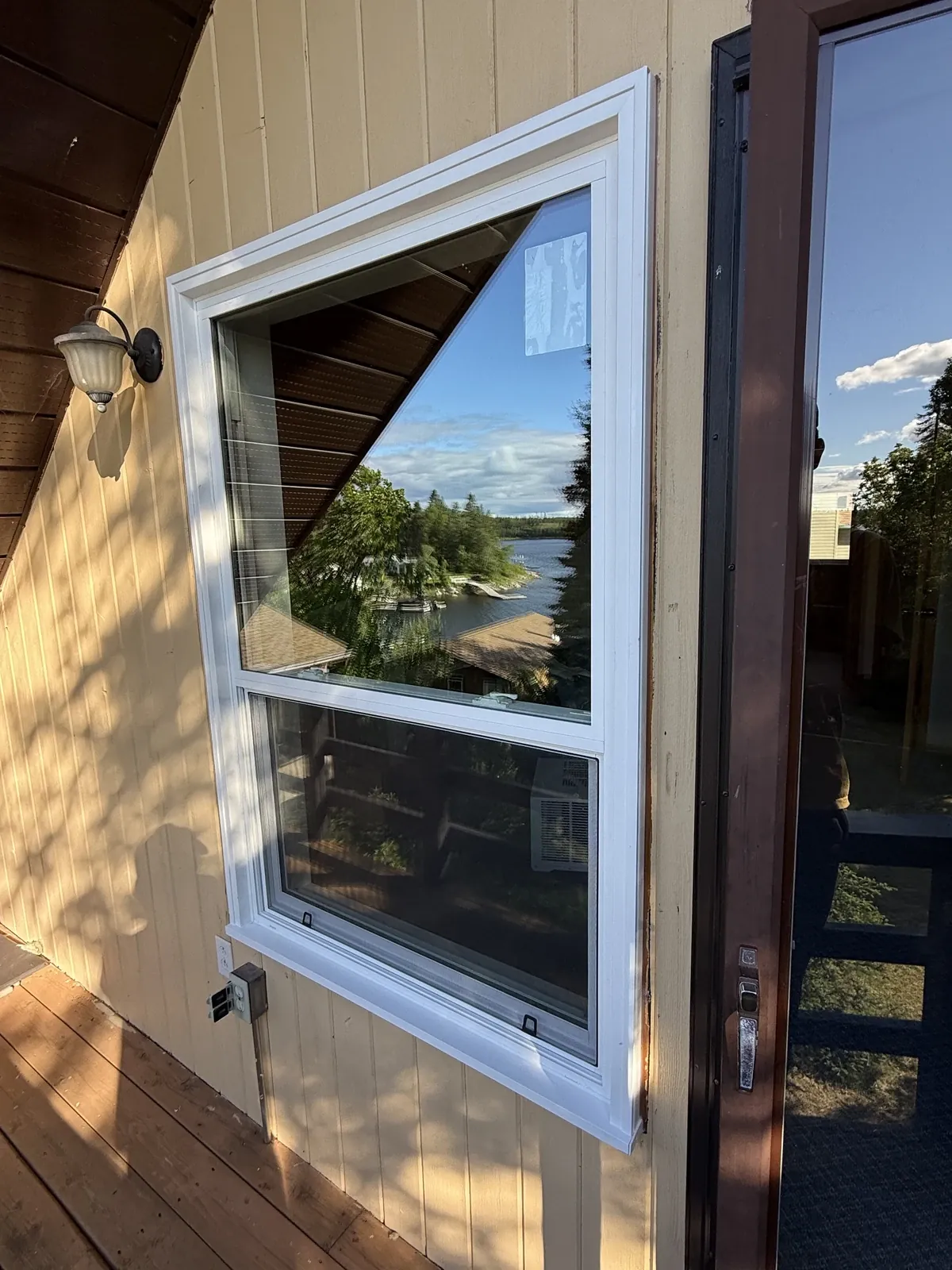
Low-E glass and argon gas are what turn plain window glass into insulating glass: a Low-E coating reflects the room’s heat back inside, and argon slows the heat crossing the space between the panes. On a quote for new windows, they sit beside four more upgrades that matter in a Manitoba winter: a third pane, warm-edge spacers, insulated frames and tight seals. Here’s what each one does, what it’s worth at −30 °C, and how to check you’re getting it.
The short answer
- Low-E and argon are the baseline, not extras. One of the two ways a window qualifies for Manitoba Hydro’s Home Energy Efficiency Loan is a parts list: triple-pane glazing, at least one Low-E coating, argon gas fill, a warm-edge spacer of at least 10 mm, and a non-metallic or thermally broken frame (Manitoba Hydro). Treat that list as the minimum.
- The third pane is the one the rebate asks for. Efficiency Manitoba’s rebate needs an ENERGY STAR certified window with at least triple-pane glass (Efficiency Manitoba).
- The spacer, frame and seals matter too. They decide whether the edge of the glass frosts up and whether you feel a draft.
- Judge the whole window. Each upgrade counts only for what it does to the window’s U-factor and Energy Rating: see our guide to U-factor, ER and ENERGY STAR.
- What we install. Every Arctic Star window is triple-pane with Low-E glass and argon gas, in a multi-chambered, fusion-welded vinyl frame, and ENERGY STAR certified.
Six window energy upgrades at a glance
The glass in a modern window is a sealed unit: panes held apart at the edges by a spacer, with gas in the spaces between. This is the triple-pane version:
The removable ENERGY STAR label on a new window shows its certified ratings and a description of its type, materials and glazing (Natural Resources Canada). Some upgrades show up there. Others you have to ask about.
| Upgrade | What it improves | How to check |
|---|---|---|
| 1. Low-E coating | Less heat radiated out through the glass. It also sets how much of the sun’s heat gets in. | The glass description should say Low-E and how many coatings. The SHGC number shows high or low solar gain. |
| 2. Argon gas | Less heat crossing the spaces between the panes. | Listed in the glass description, which also says which spaces are filled. |
| 3. Triple glazing | A lower U-factor, warmer inside glass and less condensation. | “Triple” in the glass description. Required for the Efficiency Manitoba rebate. |
| 4. Warm-edge spacer | A warmer edge of glass, so less frost and condensation along the bottom. | Not a number on the label. Ask for the spacer type in writing. |
| 5. Multi-chambered frame, welded corners | Less heat through the frame, and corners that stay sealed. | The frame material is in the product description. The whole-window U-factor includes the frame. |
| 6. Compression seals and multi-point locks | Less air leaking past the sash. | The Energy Rating includes air leakage. ENERGY STAR allows no more than 1.5 L/s·m², in or out. |
What the label must show is set by NRCan’s labelling guidelines. The air leakage limit is from the ENERGY STAR Canada specification, version 5.0.
Low-E glass: the coating that keeps heat in
Low-E is short for low emissivity. It’s a transparent coating of metal, applied to the glass in the factory and far too thin to see. Bare glass soaks up the room’s heat and radiates it outdoors. The coating gives off much less of that heat, so more stays in the room, while daylight still passes through.
How much it helps depends on the coating. Natural Resources Canada’s technology primer says Low-E glass cuts heat loss in winter and heat gain in summer by up to 30%; the federal guide Keeping the Heat In says up to 50%. Three details decide where your window lands:
- How many coatings. A triple-pane unit has six glass surfaces, numbered from the outside in, and the coatings usually go on surfaces that face the sealed spaces. Lawrence Berkeley National Laboratory’s triple-pane design, for example, puts them on surfaces 2 and 5 (Berkeley Lab). A second coating makes a measurable difference: on our Novatech 550 patio door, the same triple glazing has a U-factor of 1.42 with one Low-E coating and 1.19 with two.
- High solar gain or low. Keeping the Heat In describes “passive” Low-E coatings, which have a high solar heat gain coefficient (SHGC) and are designed to use the sun to help heat the house, and “solar control” coatings, which have a lower SHGC and take load off the air conditioner.
- Which side of the house. The winter sun sits low in the southern sky, so south-facing glass with a higher SHGC collects free heat on our bright, cold days. North-facing glass gets almost no direct winter sun, so there the U-factor is what counts. Large west-facing windows take the low afternoon sun in July, so a lower SHGC or outside shade keeps those rooms cooler. The guide’s rule of thumb is an SHGC between 0.3 and 0.4 for a new home or one renovated for energy efficiency.
Ask: how many Low-E coatings, and what is the SHGC? A quote often uses one glass package for the whole house, so if you have a wall of south or west glass, ask whether those windows can be ordered differently.
Argon gas: a better insulator than air
Heat crosses the space between two panes through whatever fills it. Keeping the Heat In describes the fill as “an odourless, colourless, harmless inert gas, such as argon or krypton,” used to reduce heat transfer through the glass. Argon, a small part of the air we breathe, is the usual choice because it conducts less heat than air does.
The width of the space matters as much as the gas. If it’s too narrow, heat conducts straight across. If it’s too wide, the gas starts to circulate and carries heat with it. The guide gives 12 to 16 mm (½ to ⅝ inch) as the best spacing, which is why a good triple-pane unit is thick: it has two of those spaces.
Krypton insulates better than argon in a narrow space, which is why slim triple-pane units have to switch to it (Berkeley Lab). It costs more, and with full-width spaces argon does the job. Our windows use argon. See argon vs krypton gas in windows.
Ask: is argon in both spaces of the triple-pane unit, and is it written on the quote? You can’t see or smell it, so the paperwork is your only check: the glass description on the label should say which spaces are filled.
Triple glazing: the third pane
A third pane adds a second gas-filled space and room for a second Low-E coating. NRCan’s technology primer rates triple-glazed products as up to 50% more efficient than double-glazed ones.
In a Winnipeg winter, the bigger payoff is at the surface of the glass. The inside pane stays warmer, so the room feels less chilly beside the window and the glass can take more indoor humidity before it fogs. Keeping the Heat In notes that in more extreme climates the edges of the glazing are more likely to fog up and freeze, and that triple glazing helps. Don’t count on the third pane for quiet, though: National Research Council tests found sealed triple glazing gives essentially the same noise reduction as double glazing, and tight seals do more (see noise-reducing windows).
The trade-offs are weight and price: three panes weigh more than two, and they cost more. In Manitoba the programs mostly settle it. The Efficiency Manitoba rebate and Manitoba Hydro’s loan both require triple-pane glass, and it’s the only kind of window we put in. For the payback math, see are triple-pane windows worth it; for the comfort side, see triple-pane windows in Winnipeg.
Ask: is every window in the quote triple-pane, including the basement windows?
Warm-edge spacers: the edge of the glass
The spacer is the strip that holds the panes apart around the edge of the sealed unit. It also carries a desiccant that absorbs moisture left inside the unit, which prevents fogging (NRCan). Spacers used to be hollow aluminum bars, and aluminum conducts heat very well: Keeping the Heat In says traditional aluminum-box spacers “contribute to heat loss and condensation problems along the edges.”
A warm-edge spacer replaces the aluminum with something that conducts less heat, such as foam, plastic, a composite or stainless steel. Efficiency Manitoba describes these insulating spacers as a thermal break between the panes that keeps the edge of the glass warmer and reduces condensation there.
It’s a small part with a visible job. On a −30 °C morning, the first place a window fogs or frosts is the bottom edge of the glass, and the spacer sits right behind that edge. If your old windows grow a line of ice there every cold snap, see why windows frost up.
Ask: what is the spacer made of, and will the quote name it? It isn’t a rating on the label, so it’s easy to leave vague. Ask us the same at your free estimate.
Frames: chambers and welded corners
Glass is most of a window, but heat takes the easiest path, and that can be the frame. NRCan’s primer notes that vinyl and fibreglass frames have several interior chambers, while metal frames tend to be less efficient because metal conducts heat more readily. Each chamber is a pocket of still air between the warm side and the cold side.
The corners are where a frame is put together, so they’re where it can come apart. A fusion-welded corner is made by heating the two mitred ends and pressing them together until they become one piece, with no joint to open up and let in air or water. That matters because vinyl grows and shrinks with temperature more than glass or aluminum does (see PVC vs vinyl windows).
The frame is also why you compare whole-window ratings. Keeping the Heat In warns that centre-of-glass ratings make a product “appear more energy-efficient than it really is.” The U-factor on the label covers the centre of the glass, the edge of the glass and the frame.
Ask: is the frame multi-chambered with welded corners, and is the U-factor on the quote for the whole window? Our frames are vinyl, multi-chambered and fusion-welded.
Seals and hardware: casement vs slider
A window that insulates well but leaks air still feels cold. The tightest window is one that doesn’t open. After that, it depends on how the sash meets the frame.
- Casement and awning windows close against a compression seal: a soft, springy strip that the sash squeezes when you lock it. Keeping the Heat In says that, other than fixed windows, “the most airtight windows are typically those with compression or magnetic seals.” Our casement windows have multi-point locks, which pull the sash in at several points instead of one.
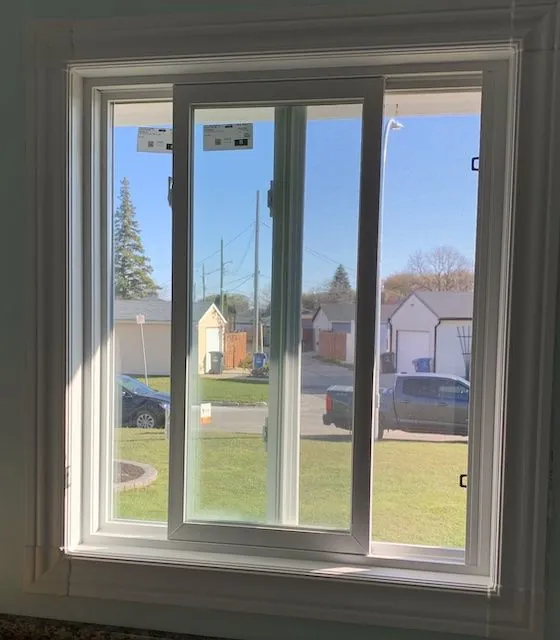
- Sliders have a sash that has to slide past its seal, so they typically use brush weatherstripping, which can’t be clamped as tight. NRCan’s primer puts it plainly: hinged windows are more air-tight than sliders.
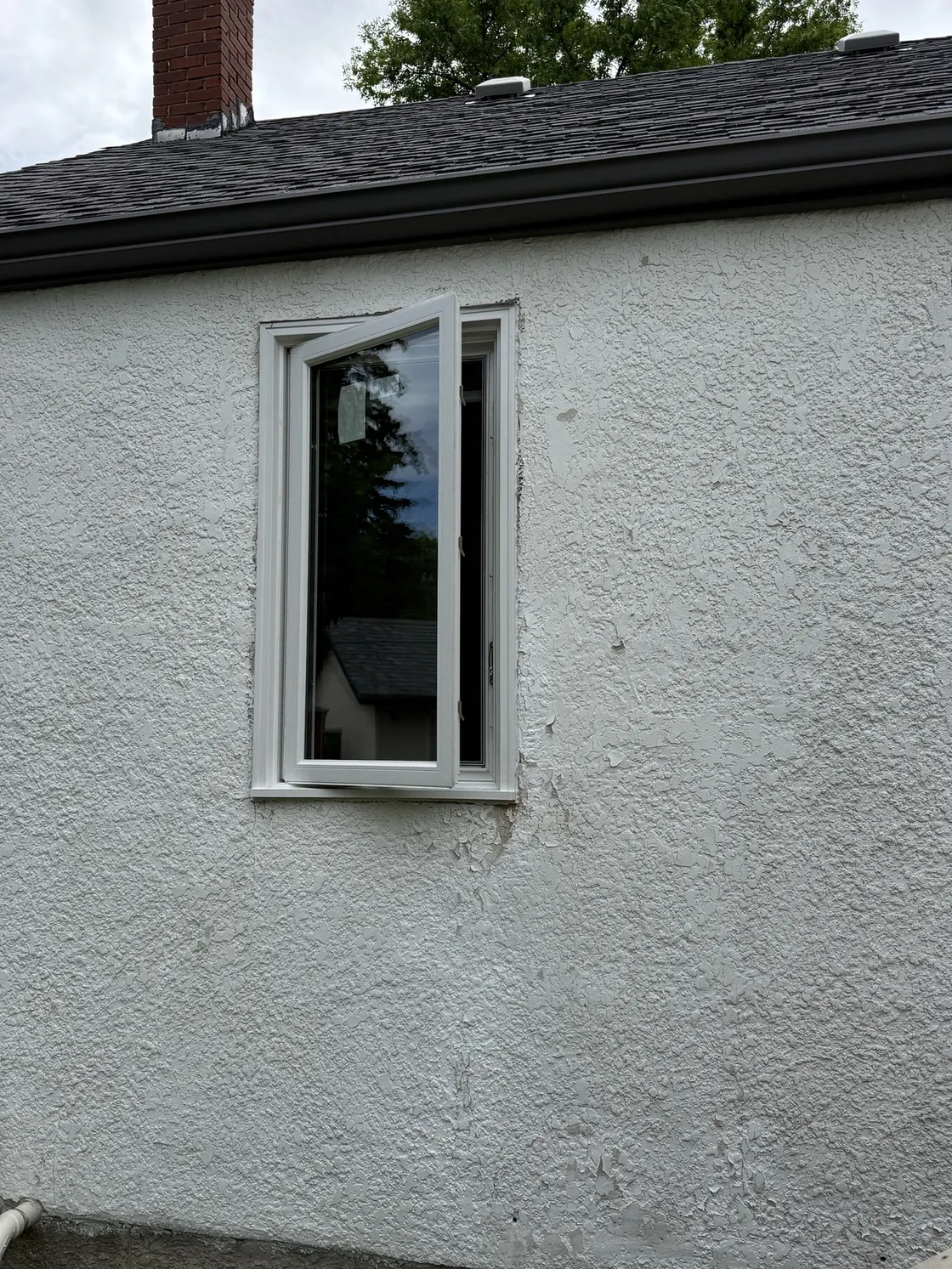
That doesn’t make a slider a bad window. Every ENERGY STAR window has to meet the same air leakage limit, and a slider is often the right choice in a basement or beside a deck or walkway, where a sash that swings out would be in the way. On the windy side of the house, a casement or a fixed window is the tighter choice. See casement vs sash vs slider windows.
One side effect: tighter windows keep more moisture in the house. Keeping the Heat In notes that many homeowners find condensation gets worse after new windows go in, because the old leaky ones were letting humidity out. Keep indoor humidity around 30% in cold weather and run your bathroom fans or HRV: see how to stop window condensation.
Ask: which windows in the quote are fixed, casement or slider, and what is the Energy Rating of each?
What to ask before you sign a window quote
The six “Ask” lines above cover the parts. Three more things belong in writing on any quote:
- The model and NRCan reference number of each window, so you can look it up on the list of certified products.
- The U-factor and Energy Rating of each complete window.
- The installation. Keeping the Heat In says it “should provide an airtight, insulated seal,” and that a poorly installed product could cause cold drafts. Ask how the gap between the frame and the wall is insulated and sealed, and whether the old frame comes out or stays: see retrofit vs full-frame installation.
Our own crew installs every window, and insulates and seals each one the day it goes in. All our windows meet the product rules for the Efficiency Manitoba rebate.
Common questions
What does Low-E mean on a window?
Low-E stands for low emissivity. It’s a transparent metal coating on the glass that reflects heat back toward where it came from, so less of your home’s heat escapes in winter and less of the sun’s heat gets in during summer. It should be named in the glass description on the window’s label and on your quote.
Is argon gas in windows worth it?
In a cold climate, yes. Argon conducts less heat than air, so filling the spaces between the panes lowers the heat lost through the glass. In Manitoba it’s effectively standard: argon is on the parts list Manitoba Hydro uses for windows financed through its loan, and every Arctic Star window has it.
Does argon gas leak out of windows over time?
The seal around the edge of the glass unit is what holds the argon in, so that seal is what to watch. You can’t see or smell argon, but you can see a failed seal: fog or moisture between the panes. Federal guidance is that a sealed unit with a broken seal is best replaced. We replace whole windows, not glass units on their own. See foggy windows.
Does Low-E glass make a room darker?
The coating itself is transparent, but every pane and coating takes a little light. If a bright room matters to you, compare the visible transmittance (VT) on the labels: a higher VT means more daylight comes through.
Do Low-E windows block the sun’s heat in winter?
It depends on the coating. A passive, high solar gain coating lets more of the sun’s heat in to help warm the house, while a solar control coating blocks more of it to ease the load on air conditioning. The SHGC on the label tells you which you have: the higher the number, the more of the sun’s heat gets through.
Comparing window quotes?
Book a free in-home estimate and we’ll measure, quote, and go through the glass, spacer and frame of the windows we’d install, along with which rebates they qualify for. For a ballpark first, try our price calculator.
Comparing window quotes?
Book your estimate