
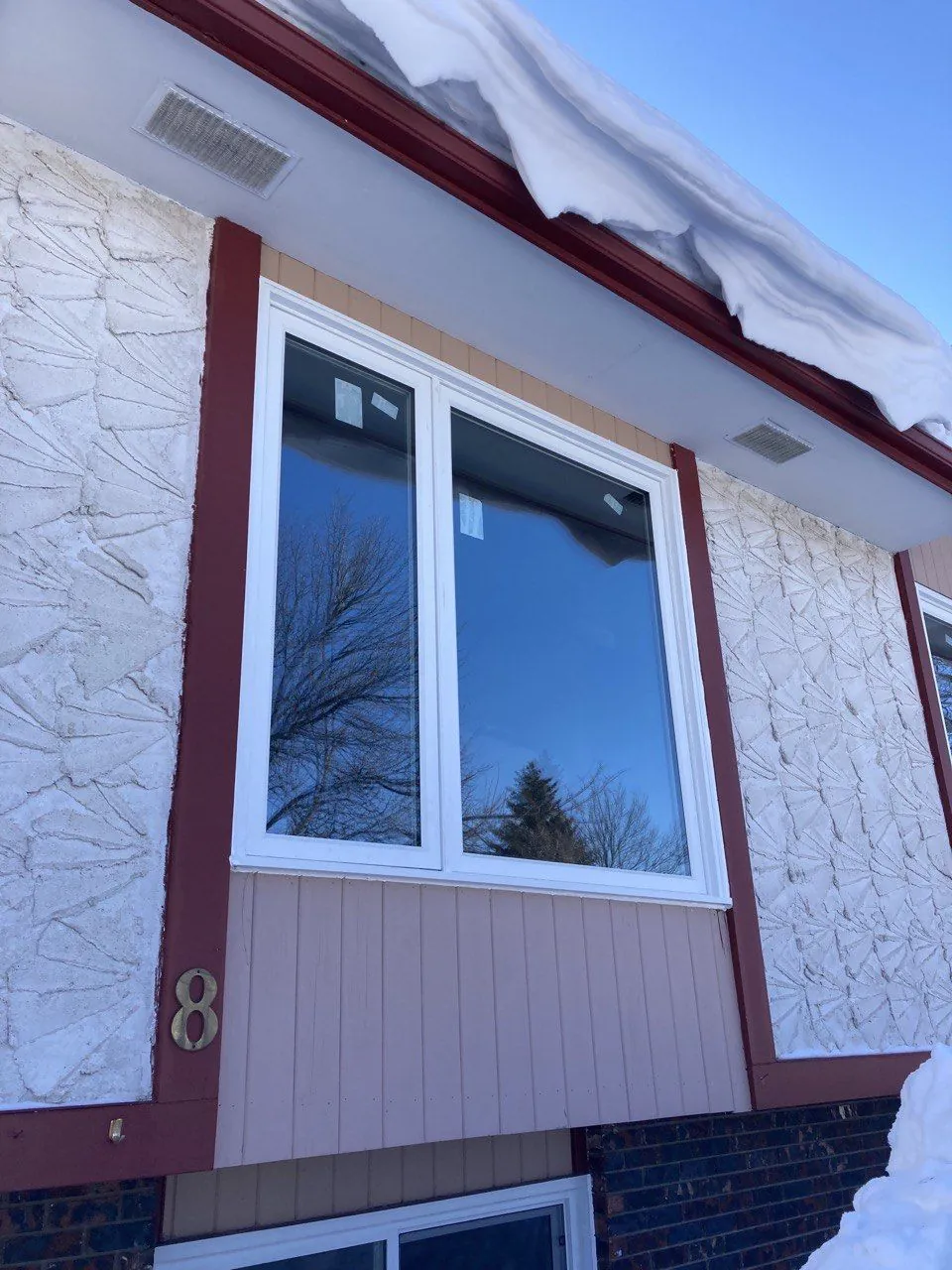
Drafty windows are a common winter complaint in Winnipeg homes, and the right fix depends on what you’re feeling. Sometimes cold outdoor air is leaking in. Sometimes the glass is so cold that it chills the air next to it. Here’s how to tell the difference, how to find and fix real leaks this weekend, how to seal safely, and when a window is past fixing.
Is it a draft or a cold window?
Three different things make a window feel drafty, and only the first one is a leak:
- An air leak. Cold outdoor air gets in through a gap: around the sash, at the lock, under the sill or between the window frame and the wall.
- A cold-glass downdraft. Room air touching cold glass cools, gets heavier and sinks, then spills across the floor. You feel moving cold air even though none is coming from outside. Natural Resources Canada notes that these currents are “often misinterpreted as air leaks around windows” (NRCan).
- Radiant chill. Your body gives off heat to a cold surface, so you feel cold standing near a big window even when the air is still.
How cold does the glass get? National Research Council Canada calculated the inside surface of clear glass on a calm −29 °C night with the room at 21 °C: about −4 °C for a single pane, 7 °C for double and 11 °C for triple (NRC). Modern Low-E glass does better, but on the coldest nights every window is cooler than the room, so a gentle fall of cool air is normal.
A quick self-check: a thin, focused stream of cold air at one joint, worse when the wind blows, is a leak. A gentle cool flow along the whole pane, even on a calm night, is cold glass.
How to find the draft
- Pick a cold, windy day. Leaks are easiest to feel when the wind is pushing on that side of the house.
- Make the house pull air in. Close all windows and doors. First turn off the furnace or boiler, the water heater and any other fuel-burning heater, and don’t test while a fire is burning in a fireplace or wood stove. Then turn on the bathroom fans, the range hood and the dryer on a cool setting. Turning the heaters off first stops the fans from pulling their exhaust back into the house (NRCan). Turn everything back on when you’re done.
- Use an incense stick, not a candle. Move it slowly around the sash, the lock, the joint between the frame and the trim, and the bottom of the window. Where the smoke is pulled sideways or blown away, air is leaking. The back of a damp hand works too.
- Check low and high. In cold weather, warm air rises and pushes out through the top of the house, which pulls cold air in near the bottom (NRCan). Check basement windows as well as the living room, and upstairs windows for warm air leaking out.
A thermal camera shows cold spots, but in winter all glass looks cold. It is most useful during a blower-door test, which an energy advisor does as part of an EnerGuide home evaluation. Efficiency Manitoba currently offers a $400 rebate on a pre-retrofit evaluation if you plan an upgrade within 12 months.
Is the draft at a door rather than a window? See what keeps an entry door warm.
Weatherstripping that fits your window
Each kind of window seals differently, so the right weatherstripping depends on how it opens:
| Window | Where air gets in | What to use |
|---|---|---|
| Casement or awning (cranks open) | Around the sash when it’s closed | A compression seal of foam or rubber. Lock the window: the lock pulls the sash tight against the seal. |
| Single or double hung (slides up) | The sides and top of the sash, where the sashes meet, and the bottom | Plastic V-strip on the sides and top, a compression strip at the bottom, and the sash lock closed. |
| Slider (slides sideways) | Along the track and where the sashes meet | Brush (pile) weatherstripping. The sash usually has to come out to replace it. |
| Old slider with no sash frame around the glass | Everywhere | Very hard to seal. An interior storm panel helps; replacing it helps most. |
| A window you never open (not a bedroom) | Around the sash | Strippable caulk that peels off in spring. |
Based on Natural Resources Canada’s Keeping the Heat In and Manitoba Hydro’s weatherstripping guide.
- Buy for durability. Felt and tape last about a season. Adhesive foam is quick and cheap but wears fast. V-strip and closed-cell rubber last for years (Manitoba Hydro).
- Check that it works in the cold. Some products get hard and seal less well in cold weather. Choose one that stays flexible and springs back quickly (NRCan).
- Don’t overdo it. The window should still close and lock easily. A strip that is too thick can stop a casement from locking, which makes the draft worse.
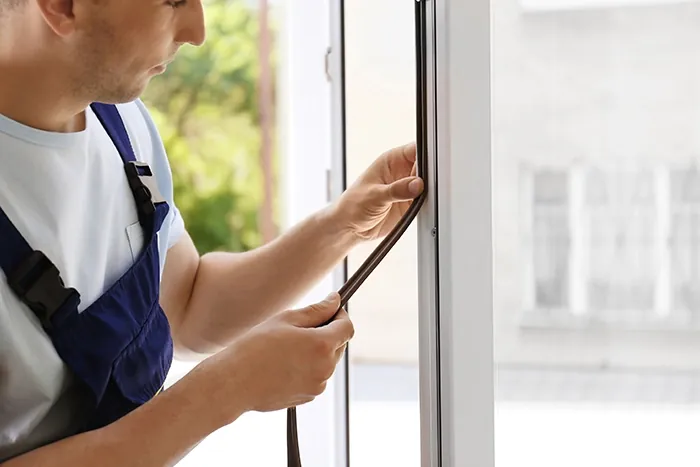
Caulk the trim: inside for air, outside for water
Much of the cold air around a window comes not past the sash but through the gap between the window frame and the wall, behind the trim.
- Inside, seal the trim. Run a flexible, paintable caulk along the joints between the trim and the wall and between the trim and the window frame. NRCan rates acrylic latex with silicone at 30 years or more.
- Fill wide gaps properly. For gaps of 6 mm (¼ inch) or more, push in foam backer rod first, then caulk over it. If you take the trim off and find an empty gap around the frame, fill it with low-expansion foam only: regular expanding foam can bow the frame so the window won’t close (NRCan).
- Seal the inside first. Outside, caulk only the cracks that let in rain. If the outside is sealed tighter than the inside, warm, moist house air can get trapped in the wall and damage it (NRCan). For outside caulking, see leaking windows.
Stopgaps for the coldest months
- Window shrink film. A clear plastic film taped over the inside of the window and tightened with a hair dryer. It is cheap and it stops air movement at the glass, but it is usually single-use, the tape can lift paint, and the window can’t be opened while it’s on (NRCan), so don’t put it on a bedroom window. From September 10 to December 10, 2026, Efficiency Manitoba offers $5 off window film kits and weatherstripping (items $9.99 and up) at participating stores.
- Removable rope caulk pressed into the gaps of a window you won’t open until spring. Never use it on a bedroom window.
- Interior storm panels. Rigid acrylic panels held on with magnets last longer than film, but they cost more (NRCan).
- Cellular shades and insulated curtains. They cut the radiant chill near the glass on the coldest nights. They aren’t airtight, though, and drawn tight they can make condensation worse, so open them during the day. See how to stop window condensation.
Seal safely
- Keep bedroom windows working. Manitoba Hydro’s guide says it plainly: “bedroom windows must be able to open at all times.” Don’t film, caulk or nail a bedroom window shut.
- Mind fuel-burning appliances. A tighter house leaves less air for a gas furnace, water heater or fireplace, and a starved chimney can spill exhaust indoors. Before a big sealing job, have a heating contractor check them, have them serviced every year, and install carbon monoxide alarms certified to CSA 6.19 (NRCan).
- Keep ventilating. As a house gets tighter, humidity can rise. Run your bathroom fans and HRV, and watch for condensation on the glass.
- No open flames. Use incense or a smoke pencil to find leaks, never a candle near curtains.
Where the biggest leaks usually are
NRCan calls air leakage control “the single most important retrofit activity” for a home. Windows are where people feel drafts, but they are only part of the picture: windows, doors and skylights can account for up to 25% of a home’s energy loss (NRCan). Large leaks are also common in the attic and around the basement rim joist.
If you’re also adding insulation, Efficiency Manitoba adds an air-sealing bonus of up to $1,000 to its home insulation rebate. You need an EnerGuide evaluation before and after, and the air sealing has to be done before the insulation goes in.
Signs a fix won’t last
- The sash won’t close tight because the frame is warped or the hardware is worn.
- Fog between the panes. The seal of the glass has failed. No weatherstripping fixes that.
- Soft or rotten wood on the sill or frame, or water stains on the wall below.
- Single-pane glass or old sliders with no sash frame. A single-glazed window loses about 10 to 20 times as much heat as the same area of well-insulated wall (NRCan).
- Ice on the inside of the glass every cold snap. That is usually humidity meeting cold glass: see why windows frost up.
- You redo the same fixes every fall.
Read more in 7 signs you need new windows before winter.
Replacing a drafty window in winter
You don’t have to wait for spring. We replace windows all winter, one opening at a time. The room we’re working in stays closed off, we use sealants and foam made for cold weather, and each window is insulated and sealed the same day before we move to the next. A standard window takes about 35 to 40 minutes. If we find rotten wood under a window, we replace it at no charge. See how winter installs work.
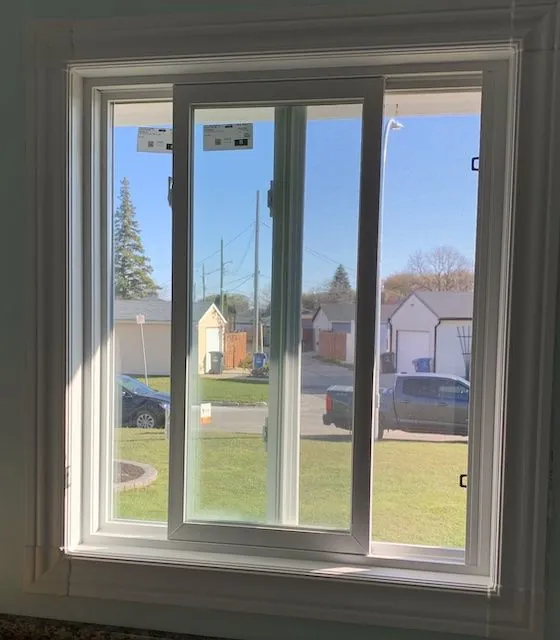
All our windows are triple-pane with Low-E glass and argon, ENERGY STAR certified and made in Canada. They meet the product rules for the Efficiency Manitoba rebate: $100 per window opening, for up to 20 openings (a bay or bow counts as one), when they replace existing windows in a detached or semi-detached house that is your primary residence. Apply within 90 days of installation and payment in full. You can also finance up to $7,500 of windows and doors through Manitoba Hydro’s loan, paid on your energy bill over up to 5 years, with interest. The loan is for detached and semi-detached homes, and it must be approved before anything is ordered. Here’s what a new window costs installed:
| Window | Small | Medium | Large |
|---|---|---|---|
| Casement | $750 – $1,150 about 24″ × 40″ | $850 – $1,300 about 30″ × 48″ | $950 – $1,450 about 36″ × 56″ |
| Single hung | $600 – $900 about 28″ × 36″ | $700 – $1,050 about 32″ × 45″ | $900 – $1,300 about 36″ × 60″ |
| Slider | $550 – $800 about 30″ × 17″ | $600 – $900 about 36″ × 22″ | $800 – $1,200 about 48″ × 36″ |
Ranges are installed prices before tax and rebates, white frames, based on Arctic Star’s own current quotes — the same numbers as our price calculator. Your exact price comes after a free in-home measure.
Common questions
Why does my window feel drafty when it’s closed and locked?
Often it’s the cold glass, not a leak: air cooled by the glass sinks to the floor, and your body loses heat to the cold surface. A thin stream of cold air at one joint, worse in the wind, is a real leak.
Does window shrink film work?
For one winter, yes. It’s cheap and stops air movement at the glass, but it’s usually single-use and the window can’t open while it’s on. Never put it on a bedroom window you might need to escape through.
Can I seal a window shut for the winter?
Not a bedroom window: it must be able to open at all times. For other windows you never open, use strippable caulk that peels off in spring.
Tired of fighting drafts every winter?
Book your estimate