
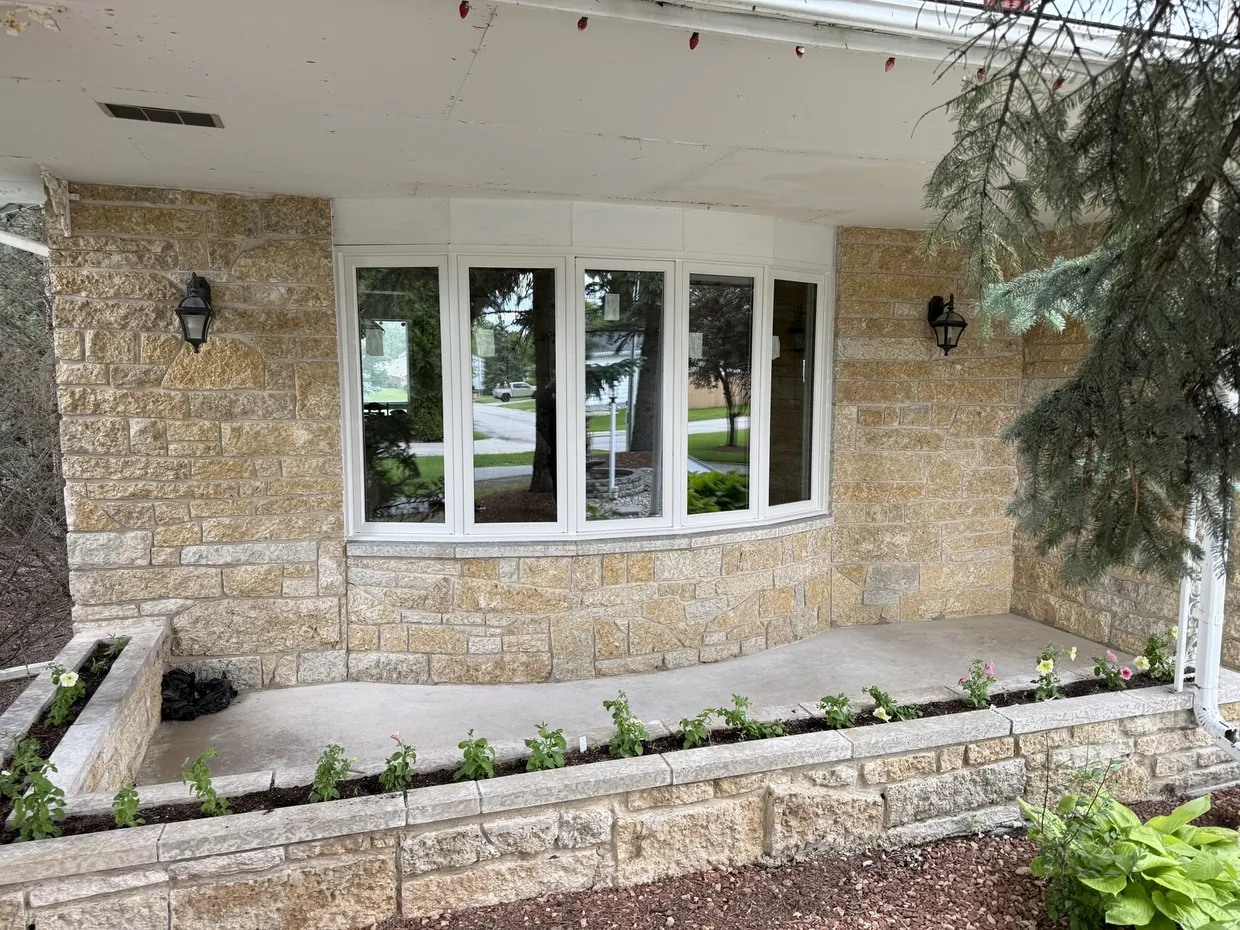
Are new windows a good investment? Yes, when the old ones are worn out, and mostly no when they still work well. New windows and doors pay you back in three ways: they protect what your home sells for, they trim the heating bill, and they make the house more comfortable and easier to look after. They rarely return their full cost in dollars, and anyone who quotes you a percentage should be able to name the source. Here’s what the Canadian evidence says, when replacing isn’t worth it, and a worked example.
The short answer
- A good investment when your windows are at the end of their life: fog between the panes, rot, drafts you can’t seal, or sashes and locks that no longer work. Age is a clue too. We suggest thinking about it at 25 years or older.
- A poor investment when the windows are sound, when you’re listing the house next month, or when the roof or furnace needs the money first.
- For resale, think protection. The Appraisal Institute of Canada lists replacing windows and doors among the renovations that maintain a home’s worth, not among the ones with the highest return.
- For energy, think slow and steady. The savings are real, but on their own they repay a whole house of windows only slowly.
- The return you’ll notice is comfort: fewer drafts, warmer glass, less condensation, less noise and less upkeep.
The three returns on new windows and doors
The Appraisal Institute of Canada (AIC), whose members value homes for a living, says the payback on a renovation is measured three ways: the value of increasing the selling price, the value of enjoying the renovated space, and the value of maintaining the worth of the property (AIC, How to Value Your Renovations). For windows and doors, that works out like this:
| Return | What you get | How sure it is |
|---|---|---|
| Resale | A house that shows well, passes inspection and gives a buyer no reason to ask for money off | Depends on the market and the buyer. Expect to protect the price, not to earn back the full cost. |
| Energy | A lower heating bill every winter you own the house | Reliable but small next to the cost |
| Comfort and upkeep | Warmer rooms, clear glass, less noise, no painting or storm windows | Certain, and it starts the day they go in. It just doesn’t show up as dollars. |
Whether new windows are a good investment for you depends on which of the three you’re buying. If you want all three, they usually are. If you only want one, read that section first.
Do new windows add resale value?
AIC’s guide sorts renovations into lists. Its top five for the highest return are a kitchen update, a bathroom update, repainting, updating décor such as lighting and worn flooring, and decluttering. Windows and doors aren’t on it.
They are on the next list, the top five renovations to maintain worth: replacing the roofing, updating the heating and cooling system, replacing windows and doors, updating the electrical, and repairing structural defects. The guide says replacing windows and doors “as they near the end of their life expectancy is essential.”
That’s the honest way to think about it. A buyer expects the windows to work, the same way they expect the roof not to leak. New ones seldom push the price up by what they cost. Worn-out ones pull it down, or send the buyer to a different house.
What about a percentage? AIC’s current guide doesn’t give one for any renovation. An older AIC estimate, reported by MoneySense in 2014, put the return on replacing windows at 50% to 75% of the cost. Treat that as a rough, dated guide: even at the top of the range you don’t get it all back at sale. The guide also warns that expensive projects that over-improve a home “may only be partially recognized by prospective purchasers.”
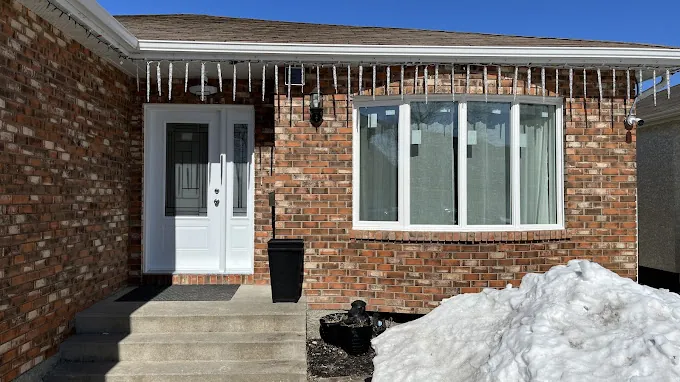
What buyers and home inspectors notice
- Fog between the panes. It means the seal of the glass unit has failed, and it’s visible from across the room. See foggy windows.
- Soft or rotten wood on a sill or frame, and water stains on the wall below a window.
- Windows that won’t open, stay open or lock. In a bedroom that’s a safety issue, not just a nuisance.
- A tired front door. It’s the one part of the house every buyer touches. A door that sticks, shows daylight at the edge or has faded and dented will be noticed before they’re inside.
- Ice and heavy condensation on the glass during a winter showing.
Any of these can end up as a line in an inspection report and a reason to negotiate. Not sure which of your windows are past saving? See repair or replace your windows.
Energy savings: real, but slow
Windows and doors do matter to the heating bill. Natural Resources Canada says windows, doors and skylights can be the source of up to 25% of a home’s energy loss, and that ENERGY STAR certified windows are about 20% more energy efficient than the average window (NRCan). In Manitoba, heating can account for nearly 60% of your energy bill (Efficiency Manitoba).
The saving in dollars is smaller than most people hope. An NRCan guide from 2014 estimated that ENERGY STAR windows, doors and skylights reduce overall annual energy costs by about 8%. To see what that means for you:
- Add up a year of energy bills. Your Manitoba Hydro account shows the last 12 months.
- Take about 8% of it as a rough guide: about $80 for every $1,000 a year you spend on energy.
- Compare it with the price of the job. For a whole house of windows, a year’s saving is a small fraction of the price.
Your result will be better if you’re replacing single-pane or failing windows, and worse if you’re replacing sound double-pane ones. Either way, don’t buy windows for the energy payback alone. If a lower bill is the only goal, air sealing and insulation usually come first: see where a Manitoba home loses heat. For the triple-pane question on its own, see are triple-pane windows worth it.
Comfort and upkeep: the return you get every day
This is the return AIC calls “the value of enjoying the renovated space,” and for most people who replace old windows it’s the one they talk about afterwards. The federal guide Keeping the Heat In says properly installed energy-efficient windows make homes more comfortable by reducing drafts and raising the temperature of the inside of the glass, which also reduces condensation. In a Winnipeg January that means:
- You can sit beside the window. Warmer glass gives off less chill, and tight seals stop the draft.
- Less water and ice on the glass, so less damage to sills and paint. New windows reduce condensation but don’t eliminate it.
- Less street noise, mostly thanks to tight new seals: see noise-reducing windows.
- Less work. Vinyl frames don’t need scraping or painting, there are no storm windows to hang, and a single hung window’s bottom sash tilts in for cleaning.
- Better locks. Our casement windows have multi-point locks.
None of this shows up on a bill, which is why it’s easy to leave out of the math. It’s also the part you’re certain to get.
When new windows are not a good investment
- Your windows are sound. If they open, close, lock and stay clear, a tube of caulk and new weatherstripping will do more for the money. See drafty window fixes.
- One sealed unit has fogged in an otherwise good window. A glass shop can replace the glass alone. We don’t do glass-only repairs: we replace whole windows.
- You’re selling in weeks. AIC’s advice for short-term owners is that “smaller and less-expensive improvements may be your best bet to recover your investment”: paint, lighting, curb appeal. Replace only what would fail an inspection, or price the house to reflect it.
- Something more urgent is waiting. A leaking roof, a failing furnace, old wiring or a structural problem sit on the same AIC list, and they come first.
- You’d be over-improving. The most expensive colours and glass options in every opening may not come back in a neighbourhood of modest homes.
- The only way to pay is high-interest credit. Interest is part of the cost, and it comes straight out of the return.
How to get the most back
- Replace the worst first. If the budget won’t cover the whole house, do the failed windows and the ones in the rooms you live in.
- Don’t skip the front door. AIC lists improving curb appeal among the lower-cost improvements that suit short-term owners, and a door is one opening, not ten. See what an entry door costs.
- Claim the rebate. As of November 2026, Efficiency Manitoba pays $100 for each eligible window, entry door or sliding glass door, up to $2,000 per home, when an ENERGY STAR certified, triple-pane product replaces an existing one in your primary residence (Efficiency Manitoba). Apply within 90 days of installation and payment in full. All our windows qualify: see our rebate guide.
- Quote the whole house. We give a volume discount when you do, and one visit costs less than several.
- Choose looks that last. AIC recommends paint “in tones with wide-ranging market appeal,” and the same goes for frames and doors. White frames are our standard; a painted exterior colour costs about 18% more. See window and door colours.
- Keep the paperwork. The invoice and warranty are worth showing a buyer. Our windows come with a lifetime warranty that transfers to the next owner.
A worked example: a 10-window bungalow
Here’s a typical Winnipeg bungalow priced with our current ranges: a three-section living room window, six casements and three basement sliders.
| Example: a bungalow with 10 openings | Installed, before tax |
|---|---|
| Living room: casement + picture + casement, about 96″ × 57″ | $2,100 – $3,150 |
| Bedrooms and kitchen: 6 casements, about 30″ × 48″ | $5,100 – $7,800 |
| Basement: 3 sliders, about 30″ × 17″ | $1,650 – $2,400 |
| Total for 10 openings | $8,850 – $13,350 |
| Efficiency Manitoba rebate, 10 openings × $100 | − $1,000 |
| After the rebate | $7,850 – $12,350 |
Ranges are installed prices before tax and rebates, white frames, based on Arctic Star’s own current quotes — the same numbers as our price calculator. Your exact price comes after a free in-home measure.
Now set the three returns against that total:
- The rebate is already in the table. It’s the one return set by a program rather than by the market, as long as you meet its rules and apply in time.
- Energy: about 8% of your annual energy costs each year, by NRCan’s older estimate. On a job this size, that is a small fraction of the price each year.
- Resale: no promised number. What you’re buying is ten windows a buyer and an inspector have nothing to say about, with a warranty that transfers.
- Comfort and upkeep: all of it, from the first night.
If you’d rather spread the cost, Manitoba Hydro’s Home Energy Efficiency Loan finances up to $7,500 of windows and doors over up to 5 years on your energy bill. The rate was 6.70% on approved credit when we checked in November 2026, and the loan must be approved before anything is ordered (Manitoba Hydro). See our financing guide, and price your own house in the calculator.
Common questions
Do new windows increase home value?
They protect it more than they raise it. The Appraisal Institute of Canada lists replacing windows and doors among the top renovations to maintain a home’s worth, alongside the roof and the furnace, not among those with the highest return. Worn-out windows give buyers a reason to offer less; new ones take that reason away.
How long does it take for new windows to pay for themselves?
On energy savings alone, a long time, and nobody can honestly give you one number. An older Natural Resources Canada estimate put the saving from ENERGY STAR windows, doors and skylights at about 8% of annual energy costs, which is small next to the price of a whole house of windows. The payback is faster when the old windows are single-pane or failing, and when you count rebates.
Should I replace windows before selling my house?
Only the ones that would hurt the sale: fogged glass, rot, or windows that won’t open or lock. If you’re selling soon, the Appraisal Institute of Canada suggests smaller, less expensive improvements are the best bet to recover your money. A full set of new windows makes more sense when you’ll live with them for years first.
Is it better to replace all windows at once or a few at a time?
All at once usually costs less per window: we give a volume discount when you quote the whole house, and there’s one installation visit instead of several. Doing a few at a time is reasonable when the budget is tight. Start with the worst windows and the rooms you use most.
Does a new front door add value?
It adds curb appeal, which is where a buyer’s first impression forms, and it costs far less than a house of windows. We can’t give you an honest percentage, because we haven’t found a Canadian source that publishes one. An insulated steel door in a neutral colour is the safe choice for resale.
Are there rebates for new windows in Manitoba?
Yes. As of November 2026, Efficiency Manitoba pays $100 for each eligible ENERGY STAR certified, triple-pane window or door that replaces an existing one, up to $2,000 per home. Manitoba Hydro’s loan can finance up to $7,500 of windows and doors, with interest. The federal Canada Greener Homes Grant is closed.
Wondering if your windows are worth replacing?
Book a free in-home estimate. We’ll measure, quote, and explain which products qualify for rebates, and the quote is usually good for a month, so there’s time to think. All our windows are triple-pane, ENERGY STAR certified and made in Canada, and our own crew installs them.
Wondering if your windows are worth replacing?
Book your estimate