
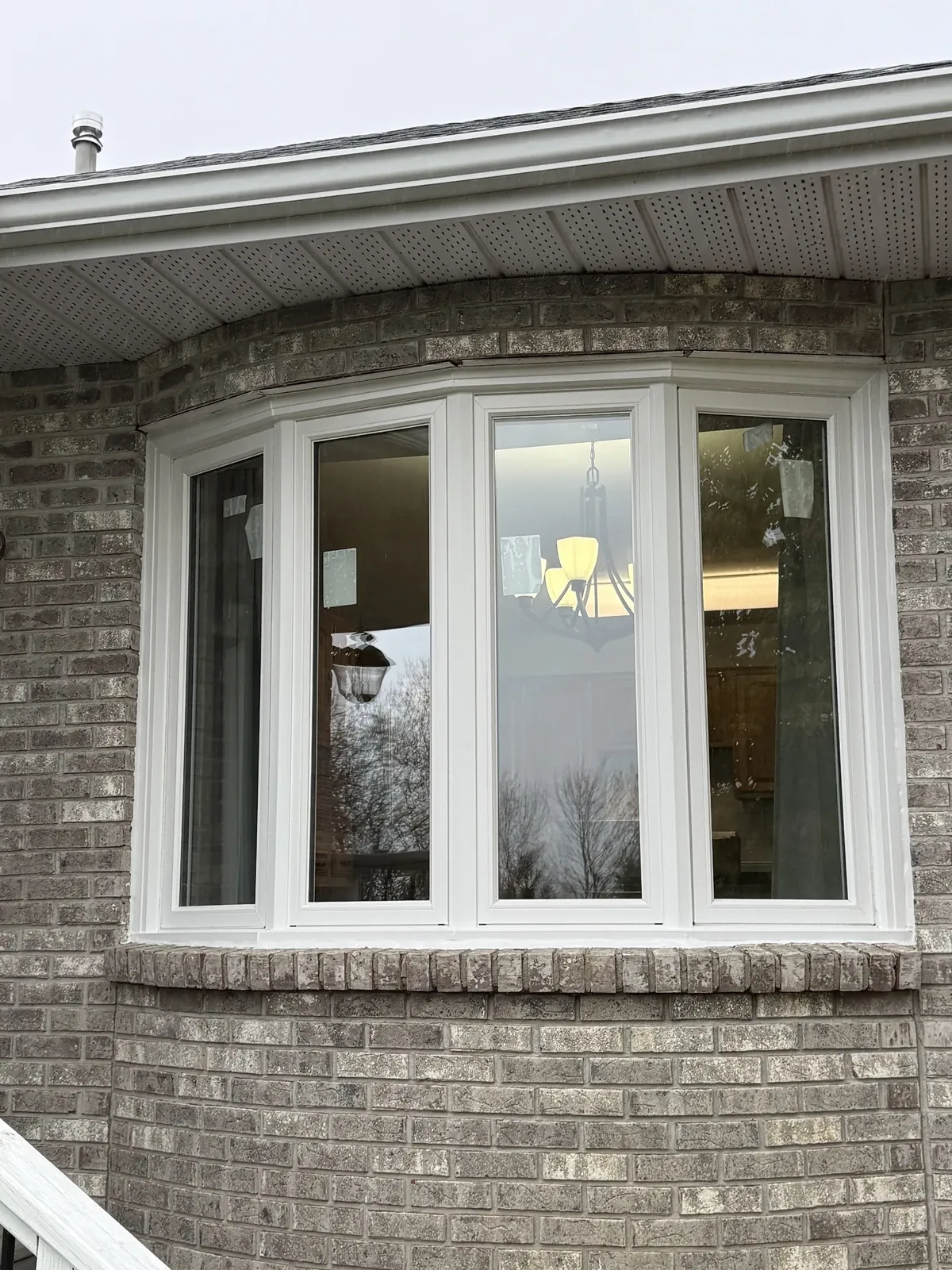
Heat loss through windows is real, but it is rarely the whole story behind a high heating bill. Natural Resources Canada says windows and doors can account for up to 25 percent of a house’s total heat loss. Three signs tell you yours are a big part of that: cold glass and drafts you can feel, frost or condensation on the inside, and rooms that never warm up while the furnace keeps running. Here’s how to test for each one tonight, and what to rule out before you blame the windows.
The short answer
- Windows are one slice of the bill. Up to 25 percent of a house’s heat loss goes through windows and doors (NRCan). Good windows can’t fix a bill on their own, but bad ones can make a room miserable.
- The three signs: glass that is cold to sit beside and drafts at the sash, frost or water on the inside of the glass, and rooms that stay cold however long the furnace runs.
- Test before you spend: a strip of tissue on a windy day, a thermometer on the glass, and the “compare” tab in your Manitoba Hydro account.
- Rule out the cheaper suspects: attic insulation, air leaks, doors and the top of the basement wall.
- No promised savings. We won’t give you a dollar figure for what new windows will save. The comfort gain is the part you can count on.
How much heat loss through windows is normal?
Natural Resources Canada’s figure is that windows and doors “can account for up to 25 percent of total house heat loss” (Keeping the Heat In, chapter 8). The words “up to” matter. The share depends on how many windows you have, how old they are, and how well the rest of the house is insulated.
Area for area, though, a window is the weakest part of the wall. The same guide says a single-glazed window loses about 10 to 20 times as much heat as the same area of properly insulated wall. That is why a room with a big old window can feel cold in a house that is otherwise fine.
For scale, Manitoba Hydro says heating and cooling together can be more than 60 percent of a home’s energy use (Manitoba Hydro). Windows are a slice of that slice. For the whole-house picture, see where a Manitoba home loses heat.
The three ways a window loses heat
- Conduction. Heat passes straight through the glass, the spacer at its edge and the frame, from the warm side to the cold side. More panes with gas between them slow it down. A metal frame speeds it up, because metal conducts heat readily (NRCan).
- Air leakage. Warm air escapes and cold air comes in through gaps around the sash and between the frame and the wall. Wind drives it. So does the stack effect: warm air rises and pushes out through upstairs windows, which pulls cold air in low down, at basement windows for example. Hinged windows such as casements and awnings are more airtight than sliders, and fixed windows are tighter still (NRCan).
- Radiation. Warm things radiate heat to cold things, so the room, and you, radiate heat to cold glass. NRCan says radiation is less than 10 percent of heat loss in most houses, and that most of it happens at windows (Keeping the Heat In, chapter 2). A Low-E coating, a metal layer too thin to see, is there to cut it.
There is also something you feel that isn’t a leak at all. Room air cools against cold glass, sinks and rolls across the floor. NRCan notes that these currents “are often misinterpreted as air leaks around windows”. The two feel alike but have different fixes:
3 signs heat loss through your windows is raising your bill
1. Cold glass and drafts you can feel
A thin stream of cold air at one joint, worse when the wind blows, is an air leak, and you are paying to heat outdoor air. A gentle fall of cool air along the whole pane, even on a calm night, is cold glass, which means heat is conducting out through it. Either way you tend to turn the thermostat up to compensate: beside a cold window you lose body heat to the glass, so you feel cold even when the room’s air is warm (NRCan).
2. Frost or condensation on the inside
Water or frost forms where a surface is cold enough for the moisture in the room’s air to condense on it, so it marks the coldest spots in the house. National Research Council Canada worked out the limits for clear glass at −29 °C with a 24 km/h wind and 21 °C indoors: single glass fogs once indoor humidity passes about 6 percent, double glass at 32 percent and triple at 49 percent (NRC, Canadian Building Digest 4).
Read the sign with a humidity gauge beside you. Manitoba Hydro suggests holding indoor humidity to about 30 percent when it is below −10 °C outside (Manitoba Hydro). Heavy ice across the glass at 30 percent points at the window. Ice at 45 percent points at the humidifier. Fog between the panes is a different fault, a failed seal. For causes and cures, see ice and frost on the inside of windows.
One safety note from the same booklet: excessive condensation on your windows can also be a sign that a fuel-burning appliance is spilling flue gas indoors. If you suspect that, have the furnace and water heater checked.
3. Rooms that never warm up, and a furnace that never rests
Walk the house on a cold evening and note which rooms are cold. If they are the rooms with the most glass, the oldest windows or the side the wind hits, the windows are a fair suspect. If the cold room has one small, newer window, look instead at a weak heat register, the attic above it or an unheated space below it.
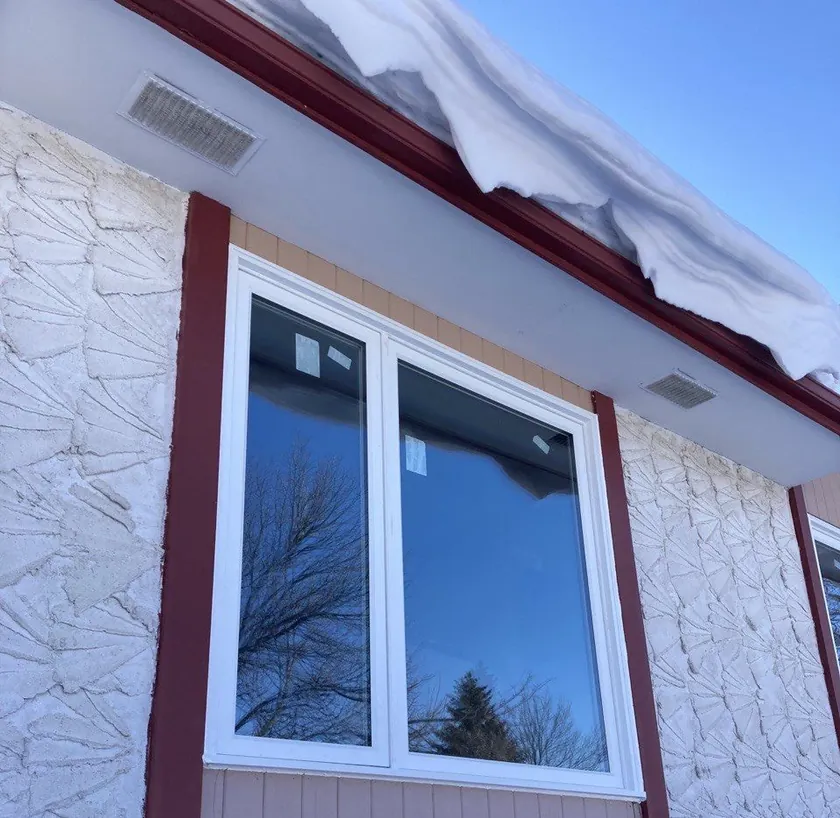
Simple tests you can do at home
- The hand test. On a cold, windy day, move the back of a damp hand slowly around the sash, the lock, the joint between the trim and the wall, and under the sill.
- The tissue or incense test. Manitoba Hydro’s draft detector is a strip of light tissue hung from a coat hanger: it flutters wherever air is moving (Manitoba Hydro). Incense smoke works the same way. To make small leaks show, close every window and door and run the bathroom fans, range hood and dryer on a cool setting. First turn off any fuel-fired furnace and water heater so the fans can’t pull exhaust back down the chimney, and turn them on again afterwards (NRCan).
- The thermometer test. After dark on a cold night, point an inexpensive infrared thermometer at the middle of the glass, the bottom edge, the frame and then the wall beside it. Compare windows with each other. One that reads several degrees colder than a similar window nearby may have a failed seal or a leak, and the table in the next section shows roughly what clear glass should read. Glass reads well. Bare, shiny metal can read wrong.
- The bill test. In your Manitoba Hydro online account, the “compare” tab shows this month’s or year’s energy use against the last one (Manitoba Hydro). Compare the energy used, not the dollars: rate changes raise the bill without any change in use, and an actual meter reading after several estimated ones can make a single bill look high.
Windows wear out slowly, so they rarely explain a sudden jump in the bill. That points to the furnace, a rate change or a catch-up reading. To fix the leaks you find, see quick fixes for drafty windows.
What U-factor means on a January night
U-factor is the rate at which heat flows through the whole window: watts per square metre for each degree of difference between inside and outside. Lower is better. To be ENERGY STAR certified in Canada, a window needs a U-factor of 1.22 W/m²·K or lower, or an Energy Rating of 34 or higher (NRCan). At −30 °C outside and 21 °C inside, a window right at that limit passes about 62 watts through each square metre.
Each added pane cuts the loss:
| Glass | Heat loss, single pane = 100 | Inside surface, calm night at −29 °C | Same night, 24 km/h wind |
|---|---|---|---|
| Single pane | 100 | −4 °C | −17 °C |
| Double pane | 45 | 7 °C | 3 °C |
| Double pane with Low-E | 36 | Not listed | Not listed |
| Triple pane | 28 | 11 °C | 10 °C |
| Triple pane with Low-E | 21 | Not listed | Not listed |
Relative heat loss from Manitoba Hydro’s Doors and Windows booklet, for 13 mm spaces between the panes. Surface temperatures from NRC’s Canadian Building Digest 4, for clear glass at the centre of the pane with 21 °C indoors.
On that night, the inside of a single pane is below freezing, which is why it ices over, while triple glass stays around 10 °C even in the wind. That gap is the difference between a chair you can sit in and one you can’t. Every window we install is triple-pane with Low-E glass and argon:
For how to read the label on a new window, see U-factor, ER and ENERGY STAR explained, and for the choice between two panes and three, double-pane vs triple-pane windows.
What to check before you blame the windows
- Air leaks elsewhere. NRCan calls air leakage control “the single most important retrofit activity”. Its checklists include the attic hatch, plumbing stacks and ceiling light fixtures, electrical outlets, and the line where the wood frame of the house sits on the foundation.
- The attic. Manitoba Hydro recommends adding attic insulation in homes built before 1999 (Manitoba Hydro).
- The basement header. This is the band at the top of the foundation wall where the floor joists rest. The stack effect pulls cold air in there (NRCan).
- Doors. Check the weatherstripping and the seal along the bottom of every exterior door. See fixes for a drafty front door.
- The furnace. The same Manitoba Hydro article says to change the furnace filter every three months. Check that registers in the cold rooms are open and not under furniture.
An energy advisor’s blower-door test measures all of these leaks at once, which is worth doing before a large project.
Will new windows lower your heating bill?
Some, yes. How much depends on what you replace. Going from single-pane or old aluminum windows to triple-pane is the big step in the table above. Going from sound double-pane windows to triple is a smaller one. We don’t quote a savings figure, because it depends on your house, your fuel, your thermostat and the winter.
What you can count on is comfort: warmer glass, no draft at the sash and less frost. You may also find you stop turning the heat up to make up for a cold room.
As for cost, a medium casement (about 30″ × 48″) runs $850 – $1,300 installed, before the Efficiency Manitoba rebate of $100 per eligible opening (as of November 2026; confirm the current rules with Efficiency Manitoba).
Ranges are installed prices before tax and rebates, white frames, based on Arctic Star’s own current quotes — the same numbers as our price calculator. Your exact price comes after a free in-home measure.
We wouldn’t replace a sound window for the energy savings alone. If a window passes the checks in repair or replace, seal it first. If it fails them, the lower heat loss is one more reason to replace it. We look at the full return in are new windows a good investment.
Common questions
How much heat is lost through windows?
Natural Resources Canada says windows and doors can account for up to 25 percent of a house’s total heat loss. The share is highest in homes with many windows, single glazing or leaky frames.
How can I tell if my windows are losing heat?
Look for three things in cold weather: glass that is cold to sit beside or a draft at the sash, frost or water on the inside of the glass, and rooms that stay cold. Confirm it with a strip of tissue at the sash on a windy day and an infrared thermometer on the glass.
Do triple-pane windows really reduce heat loss?
Yes. In Manitoba Hydro’s comparison, plain triple glass loses 28 percent as much heat as a single pane, against 45 percent for plain double glass. On a calm −29 °C night the inside of clear triple glass sits near 11 °C, compared with about 7 °C for double.
Is condensation on my windows a sign of heat loss?
It is a sign the glass is cold, and cold glass is losing heat. But indoor humidity matters as much as the window. If humidity is near 30 percent and the glass still ices up in cold weather, the window is the weak point. If humidity is much higher, deal with that first.
What is a good U-factor for a window in Manitoba?
The lower the better. ENERGY STAR certification in Canada requires a U-factor of 1.22 W/m²·K or less, or an Energy Rating of 34 or more. The Efficiency Manitoba rebate also requires triple-pane glass.
Will new windows lower my heating bill?
Usually somewhat, and most when they replace single-pane or leaky windows. Nobody can promise a figure, because it depends on the house, the heating fuel and the weather. The surer gains are warmer rooms, fewer drafts and less frost.
Want to know what warmer windows would cost?
Book a free in-home estimate and we’ll measure your windows, quote triple-pane replacements and explain which ones qualify for rebates. Book online, or start with a ballpark from the price calculator.
Windows making your furnace work overtime?
Book your estimate