
The signs you need new windows are easy to check yourself, and not all seven mean replacement. A draft, a stiff crank or an old date stamp can often be fixed or simply watched. Fog between the panes, ice on the inside, rot in the frame and a sash that won’t lock are the signs to take seriously. Here’s how to check each sign in about two minutes, whether a repair can buy you time, and which ones shouldn’t wait for spring.
The short answer
- The seven signs: a draft you can feel, fog between the panes, heavy frost or ice on the inside, heating bills that keep climbing, windows that are hard to open, close or lock, rot or soft spots in the frame, and age past 20 years.
- One sign on a sound frame is usually a repair. Two or more on the same window, or anything wrong with the frame itself, points to replacement.
- The urgent ones are water, rot and a window that won’t close, lock or open. Deal with those before freeze-up.
- Winter is not a reason to wait. We replace windows all winter, one opening at a time.
A 15-minute fall inspection, room by room
Pick a cool, windy day. Bring a strip of tissue, a flat screwdriver and your phone’s flashlight, and give each room about two minutes.
- Look through the glass, then at it. Shine the light across each pane and look for haze, streaks or droplets between the panes, and for cracks.
- Look at the frame, the sill and the wall below. You’re looking for stains, peeling paint, mould and cracked caulk.
- Press the sill and bottom corners of any wood window with the screwdriver. Soft means rot.
- Open, close and lock it. Start with the bedrooms. Note anything that sticks or won’t lock.
- Hold the tissue at the edges of the sash, at the lock, and where the trim meets the wall. If it flutters, air is moving.
- Walk around outside. Look for open caulk joints and rot at the sills, and check that the small weep holes along the bottom of the frames are clear.
Write down what you find, window by window. This is the same ground Natural Resources Canada covers in its own list: damage such as rot, mould or staining; the glass, paint, weatherstripping and hardware; and air leakage around the frame and at every joint that moves (Keeping the Heat In, chapter 8). Frost only shows in real cold, so check for it again on the first −20 °C morning. For the upkeep side of a fall check, see our window winterizing checklist.
The 7 signs you need new windows, and how to check each
1. You can feel a draft
Outside air is getting in past worn weatherstripping, a lock that no longer pulls the sash tight, or a gap behind the trim. Not every draft is a leak, though. Air cooled by cold glass sinks and spills across the floor, and it feels the same.
- Check: the tissue test on a windy day. A flutter at one spot is a leak. A cool flow down the whole pane with the tissue hanging still is cold glass.
- Can a repair buy time? Usually. New weatherstripping and caulk fix most leaks: see quick fixes for drafty windows.
- Replace when the sash is warped, you redo the same fix every fall, or the “draft” is really single-pane glass.
2. Fog or moisture between the panes
The seal around the glass unit has failed and moist air is getting in between the panes. The unit no longer insulates the way it was built to, and wiping won’t help because the moisture is sealed inside.
- Check: clean both sides of the glass. Whatever haze is left is inside. It shows best on a cold morning or with the sun on the glass.
- Can a repair buy time? Yes, if the frame is sound. A glass shop can replace the sealed unit, which NRCan calls the best fix, and the window may still be under warranty. We replace whole windows, so we don’t do glass-only swaps or repairs.
- Replace when the frame is tired too, or units around the house are fogging at the same age. More in foggy windows between the panes.
3. Heavy frost or ice on the inside
A line of water along the bottom of the glass on the coldest mornings can happen to any window. Thick frost or ice means the glass or frame is colder than the room’s humidity allows. How much humidity a window can take depends on the number of panes, as National Research Council Canada’s figures show (Canadian Building Digest 4):
- Check: put a humidity gauge in the room. Manitoba Hydro suggests about 30 percent when it is below −10 °C outside (Manitoba Hydro).
- Can a repair buy time? Lowering humidity can: turn the humidifier down, run the bathroom fans and open the blinds. See how to stop window condensation.
- Replace when ice builds even at about 30 percent humidity, the frosty windows are single-pane or aluminum-framed, or meltwater is staining the sill. More in ice and frost on the inside of windows.
4. Your heating bills keep climbing
Windows and doors can account for up to 25 percent of a house’s heat loss (NRCan), so they are a suspect, but not the only one.
- Check: the “compare” tab in your Manitoba Hydro online account shows this year’s energy use against last year’s (Manitoba Hydro). Compare the energy used, not the dollars.
- Can a repair buy time? Often. Manitoba Hydro calls sealing air leaks often the least expensive way to cut a heating bill, so it comes first.
- Replace when rising use comes with signs 1, 3 or 5 on the same windows. Our guide to heat loss through windows has the home tests.
5. Windows are hard to open, close or lock
The cause can be dirt in the track, worn hardware, swollen wood, a sagging sash or the wall shifting around the window. A window that won’t lock isn’t pulled tight against its seal. One that won’t open is a safety problem in a bedroom: as Manitoba Hydro’s guide puts it, bedroom windows “must be able to open at all times” (Manitoba Hydro).
- Check: open, close and lock each one. Then lock it on a strip of paper: if the paper slides out freely, the seal isn’t being squeezed.
- Can a repair buy time? Usually. Clean and lubricate first. Cranks, latches and locks can be serviced or replaced (NRCan).
- Replace when the sash is warped, parts are no longer made, or a bedroom window can’t be made to open easily.
6. Rot, cracks or soft spots in the frame
Water is getting in and staying, and each freeze and thaw opens the cracks a little wider. This is the sign that settles the question, because every other repair depends on a sound frame.
- Check: press a screwdriver into the sill and the bottom corners, especially where the paint is cracked or peeling. Sound wood pushes back. Look at the wall below for stains.
- Can a repair buy time? Only for a small, shallow spot, and only if you also stop the water: see why windows leak.
- Replace when the screwdriver sinks in. When we replace a window and find rotten wood under it, we replace that wood at no charge.
7. Your windows are 20+ years old
Age is not a fault on its own. It is a reason to look closely. A U.S. government planning table gives vinyl and aluminum windows 20 to 30 years and the glass about 20 (USDA Forest Service), and our own FAQ suggests thinking about replacement at 25.
- Check: the year is often printed on the spacer between the panes. Otherwise go by the age of the house or the last renovation.
- Can a repair buy time? Upkeep can. A 25-year-old window that passes the first six checks has earned another winter.
- Replace when an old window also has a failing frame (sign 6), shows two or more of the other signs, or is single-pane.
For the full decision, including a problem-by-problem table and how long each type of window lasts, see repair or replace your windows.
How urgent is it?
| What you found | How soon | Why |
|---|---|---|
| Rot, a soft sill or water stains (sign 6) | Before freeze-up | Water in the wall keeps doing damage, and it spreads beyond the window. |
| Won’t close or lock; a bedroom window that won’t open (sign 5) | Now | Security, heat loss and a way out in a fire. |
| Ice on the inside every cold snap (sign 3) | This winter | Meltwater runs into the sill and the wall below. |
| A draft (sign 1) | This fall | Seal it now. Replace if the fix doesn’t last. |
| Fog between the panes (sign 2) | Can wait a season | You lose insulation and the view, but it doesn’t harm the house. |
| Rising bills (sign 4) | Investigate first | The cause may be the attic, air leaks or the furnace. |
| Age alone (sign 7) | Watch | Inspect every fall. |
Signs that don’t mean you need new windows
- A little water at the bottom of the glass on the coldest mornings that clears by midday. That is humidity meeting cold glass. New windows reduce condensation but don’t end it: indoor humidity is still the main control.
- A chill near the window on a calm night while the tissue hangs still. Natural Resources Canada notes that the air currents set up by cold surfaces “are often misinterpreted as air leaks around windows” (NRCan).
- One stiff crank on a window that is otherwise tight and dry.
- A window that sticks only part of the year. Winnipeg’s clay soil moves foundations with the seasons, so the wall may be shifting around a window that is fine.

If winter has already started
You don’t have to live with a failed window until May. We install all winter. We work on one opening at a time with the room closed off, use sealants and foam made for cold weather, and insulate and seal each window the same day before the next one comes out. A standard window takes about 35 to 40 minutes. See how winter window replacement works.
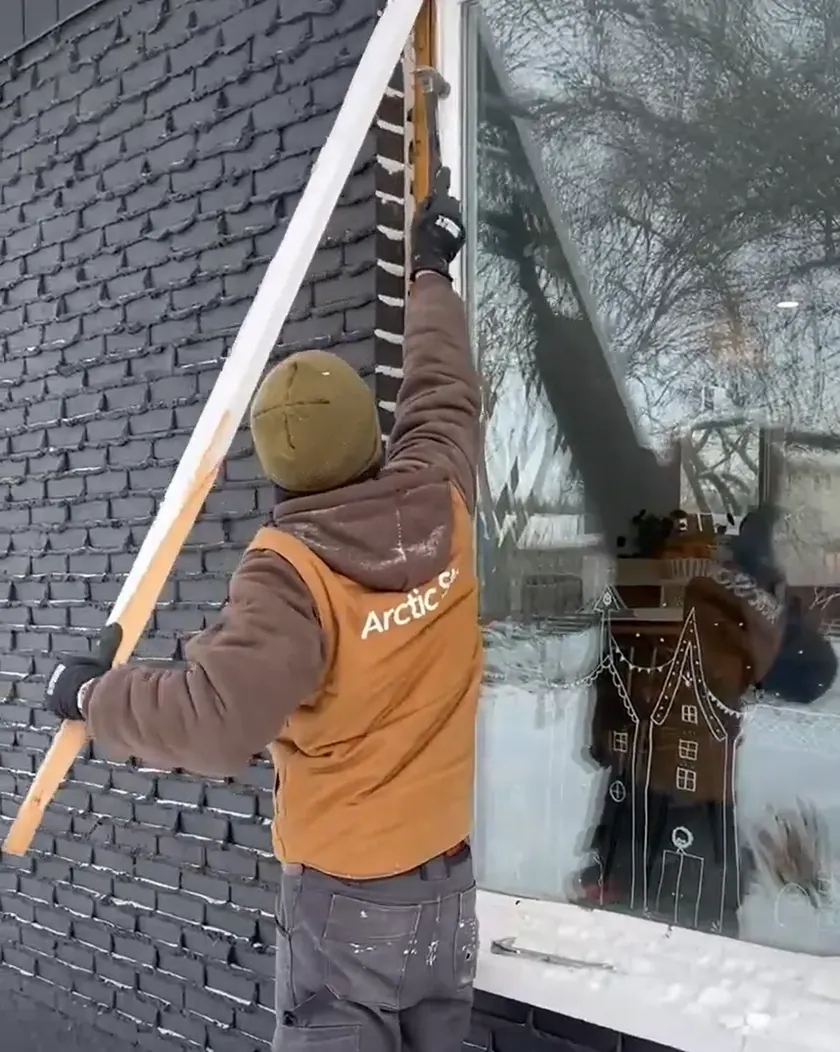
January and February are also the best months to buy new windows. Ask us for the current lead time. Until install day, seal the worst leaks and keep the humidity down.
On cost: a medium casement (about 30″ × 48″) runs $850 – $1,300 installed. As of November 2026, the Efficiency Manitoba rebate pays $100 back per eligible opening (confirm the current rules with Efficiency Manitoba), and Manitoba Hydro’s loan can spread the cost over up to 5 years on your energy bill, with interest. The loan has to be approved before anything is ordered.
Ranges are installed prices before tax and rebates, white frames, based on Arctic Star’s own current quotes — the same numbers as our price calculator. Your exact price comes after a free in-home measure.
Common questions
What are the signs that windows need replacing?
The clearest are rot or soft spots in the frame, a sash that won’t close or lock, fog between the panes, and heavy frost or ice on the inside in cold weather. Drafts, rising heating bills and age over 20 years are reasons to inspect, and often a repair is enough.
How often should windows be replaced?
There is no fixed schedule. Planning tables put vinyl and aluminum windows at roughly 20 to 30 years or more, and wood at 20 to 50 depending on upkeep. Inspect them every fall once they pass 20, and replace on condition, not on age.
Do drafty windows always need to be replaced?
No. Most drafts come from worn weatherstripping or gaps behind the trim, and both can be fixed with basic tools. Replace a drafty window when the sash is warped, the frame is rotted, or the same fix fails every year.
Is condensation a sign I need new windows?
Not by itself. Condensation on the room side depends on indoor humidity as much as on the glass. If ice builds up with humidity near 30 percent, the window is the weak point. Fog between the panes is different: it means the glass seal has failed.
Can windows be replaced in winter in Winnipeg?
Yes. We install all winter, one opening at a time with the room closed off, using sealants and foam made for cold weather. Each window is insulated and sealed the same day, and a standard window takes about 35 to 40 minutes.
Should I replace a window with a broken seal?
If the frame is sound, a glass shop can replace only the sealed glass unit. If the frame is also worn, or several units of the same age are fogging, replacing the whole window makes more sense.
Thinking about new windows?
If your inspection turned up rot, ice or a window that won’t lock, book a free in-home estimate. We’ll measure, quote, and explain which windows qualify for rebates. Book online, or get a ballpark from the price calculator first.
Seeing these signs on your windows?
Book your estimate