
Leaking windows usually let water in during heavy, wind-driven rain or when snow melts in spring. The water may come through the window, around it, or from the roof and wall above it, so the first job is finding where it gets in. Here’s how to find it, what you can fix yourself, and when the window needs replacing.
If water is coming in right now
- Close and lock the window. On casement and awning windows, the lock pulls the sash tight against the seals.
- Mind the electricity. If water reaches an outlet or a baseboard heater, switch off that circuit at the panel.
- Catch the water. Lay towels on the sill and floor, and put a container under any drip.
- Move things away from the window: rugs, furniture and electronics.
- Take photos of where the water shows up. They help whoever fixes it, and your insurer if you make a claim.
- Stay off the ladder. Don’t climb up in the rain to fix it. Wait for a dry day.
When it stops, dry everything out. A federal biologist advises drying wet walls and belongings within 48 hours to keep mould from growing (CBC News). Fans and a dehumidifier help. If the drywall stays soft, stained or musty, water is inside the wall: have it opened up and dried.
Is it a leak or condensation?
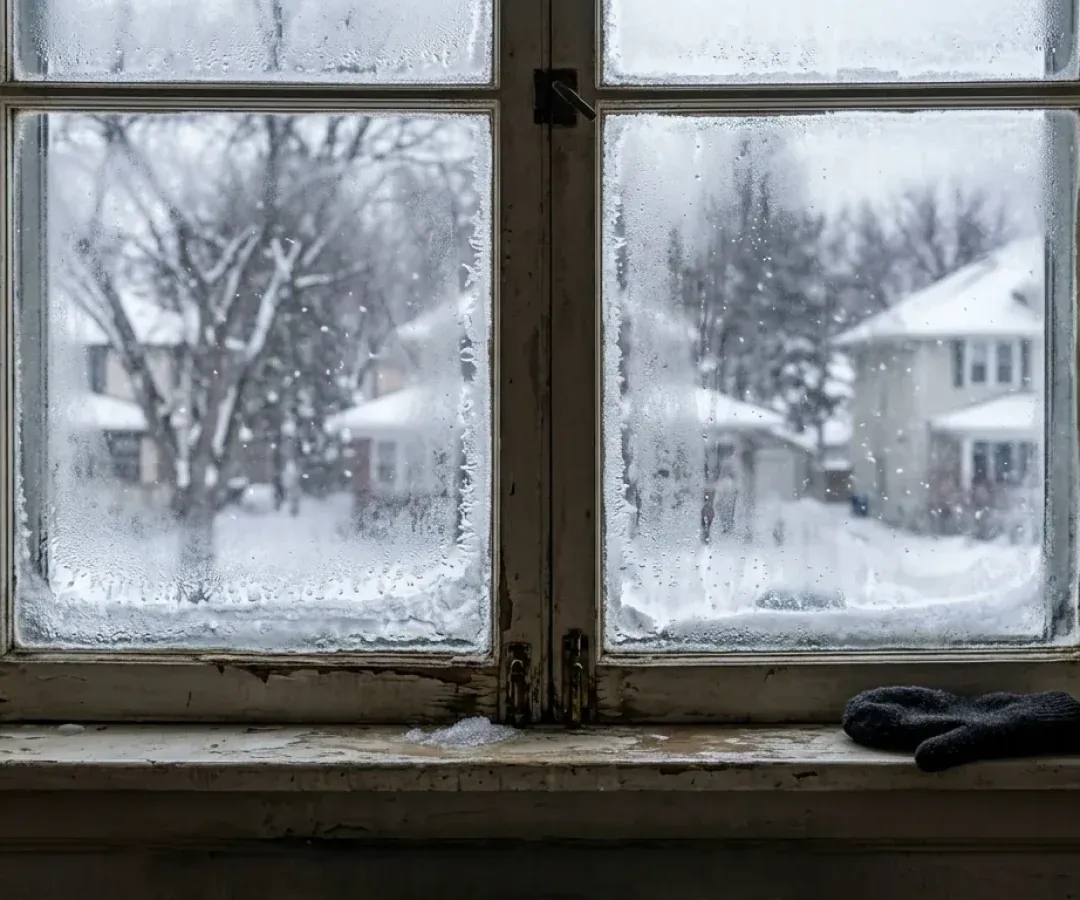
In a Winnipeg winter, water on the sill is often condensation, not a leak.
- Condensation forms on the inside of the glass on cold mornings and runs down to the sill. It’s worst on the coldest days, not when it rains.
- A leak shows up during or after rain or snow melt, usually at the corners of the frame, under the window or on the wall.
- Fog between the panes means the glass seal has failed. Water isn’t getting into the house, but the window has lost some of its insulating value.
If it’s condensation, see how to stop window condensation. If not, read on.
Seven places water gets in
Water rarely comes through the glass itself. It finds its way around the window, or comes from above it.
- The roof and wall above. Ice dams, overflowing eavestroughs and gaps in siding or stucco let water into the wall. It runs down inside and can show up at the top or the bottom corners of the window, even when the window is fine.
- The flashing over the window. A strip of metal or membrane above the frame sheds water away from the top of the window. If it’s missing, bent or installed so water runs behind it, water gets in behind the trim.
- The seal around the frame. The caulking between the window and the wall cracks and shrinks after years of sun and freeze–thaw, leaving a gap.
- The frame corners and glazing. On older windows the corners can open up, and the seal where the glass meets the sash can fail.
- The sash and weatherstripping. If the window doesn’t close tight, wind-driven rain gets past worn weatherstripping.
- The sill and weep holes. Water that gets into the frame is meant to drain out through small slots at the bottom, called weep holes. If they’re blocked, or the sill slopes toward the house, the water comes inside instead.
- Window wells and snow. A basement window sits at or below ground level. A window well that can’t drain, or snow piled against the wall, leaves the window sitting in water.
Where you see water, and what it means
| Where you see water | What it usually means, and what to do |
|---|---|
| On the glass on cold mornings | Condensation, not a leak. Lower your indoor humidity. |
| Between the panes | The glass seal has failed. It isn’t a leak, and the fog won’t clear. The sealed glass or the window needs replacing. |
| Standing in the track of a slider or hung window | Blocked weep holes. A little water in the track during rain is normal if it drains away. If it sits there or spills inside, clean the track and the holes. |
| At the bottom corners | Blocked drainage, cracked caulking or open frame corners. Clear the drainage, re-caulk outside and check the corners. |
| Around the sash after wind-driven rain | Worn weatherstripping, or a sash that doesn’t close tight. Replace the weatherstripping and check the lock. |
| At the top of the window or on the wall above | The roof, eavestrough, an ice dam or the flashing. Check above the window first. |
| On the wall or floor below the window | Water getting past the sill into the wall. Have the opening checked for rot. |
| At a basement window | A window well that can’t drain, or melting snow. Clear the well and its drain, and add a cover. |
Find the leak with a garden hose
If you can’t tell where the water comes from, recreate the rain on a dry day. You need a garden hose and a helper inside.
- Dry the window, sill and wall inside completely. Close and lock the window.
- Set the hose to a gentle shower and spray down or straight on, not upward under the siding or flashing. Never use a pressure washer: it forces water past seals that hold fine in real rain.
- Start low. Wet only the sill and the bottom corners for about five minutes while your helper watches inside with a flashlight.
- Work up one area at a time: the sides, the top of the window, then the wall above it, about five minutes each.
- When water shows up inside, the last area you sprayed is most likely where it gets in.
Starting at the bottom matters. If you spray the top first, the water running down hides where the leak really is. For a second-storey window, or a leak you can’t pin down, call a contractor who does leak testing.
Fixes you can do yourself
- Clear the weep holes. Vacuum the track, then open each slot at the bottom of the frame with a pipe cleaner or thin wire. Pour a cup of water into the track and check that it drains outside. Never caulk or paint over weep holes.
- Re-caulk the outside. Cut out cracked or loose caulking, clean and dry the joint, and run a new bead of exterior sealant made for windows and siding. Do it on a dry day, within the temperature range printed on the tube. Leave the bottom edge of the flashing over the window open: water has to drain out there.
- Replace worn weatherstripping so the sash seals tight when it’s closed and locked.
- Clean the eavestroughs and point the downspouts away from the house, so roof water doesn’t pour down the wall.
- Clear the window wells. Scoop out leaves and snow, make sure the drain at the bottom isn’t blocked, and consider a clear well cover. If the window is a bedroom’s emergency exit, the cover must open easily from inside.
One thing not to do: don’t caulk the inside of the window to stop a leak. Sealing the inside trim helps with drafts, but with water it only hides the leak and can trap the water in the wall. Leaks are stopped on the outside.
Repair or replace?
A repair is enough when the window itself is sound:
- The caulking outside is cracked, but the frame is solid.
- The weep holes or the track were blocked.
- The weatherstripping is worn.
- The water comes from the roof, the eavestroughs or an ice dam. Fix those, and the window may be fine.
It’s time to replace the window when:
- Water comes through the frame corners, or the frame is cracked or warped.
- The wood on the sill or around the frame is soft, dark or crumbling, or the paint and drywall below keep staining.
- The leak keeps coming back after you’ve re-caulked, cleared the drainage and ruled out the roof and wall above.
- The window is old and drafty, frosts up, or has fog between the panes. A new window fixes the drafts and the fog, and cuts down frost.
Replacing a leaking window also shows what the water has done underneath. When we replace a window, rotten wood we find under it is replaced at no charge before the new window is insulated and sealed. Whoever you hire, ask how they keep water out at the top and bottom of the opening. In Canada, the CSA A440.4 standard sets out minimum requirements for installing windows in homes. See also 7 signs you need new windows.
What a new window costs
Most leak fixes cost little: clearing the drainage and new caulking or weatherstripping are weekend jobs. Roof and eavestrough repairs vary with the job. If the window needs replacing, here’s what a new one costs installed:
| Window | Small | Medium | Large |
|---|---|---|---|
| Casement | $750 – $1,150 about 24″ × 40″ | $850 – $1,300 about 30″ × 48″ | $950 – $1,450 about 36″ × 56″ |
| Slider | $550 – $800 about 30″ × 17″ | $600 – $900 about 36″ × 22″ | $800 – $1,200 about 48″ × 36″ |
| Single hung | $600 – $900 about 28″ × 36″ | $700 – $1,050 about 32″ × 45″ | $900 – $1,300 about 36″ × 60″ |
| Picture | $550 – $800 about 24″ × 36″ | $700 – $1,050 about 36″ × 44″ | $950 – $1,400 about 48″ × 54″ |
Ranges are installed prices before tax and rebates, white frames, based on Arctic Star’s own current quotes — the same numbers as our price calculator. Your exact price comes after a free in-home measure.
Our written quotes are all-inclusive: taxes, installation, disposal of the old window and a lifetime accidental glass-breakage warranty. Rotten wood found under the window is replaced at no charge, and every window we install meets the product rules for the $100-per-opening Efficiency Manitoba rebate. You can also finance up to $7,500, paid over up to 5 years on your energy bill, through Manitoba Hydro; the loan must be approved before anything is ordered. See the full window cost guide, or price your own windows with the calculator.
A leak check for every season
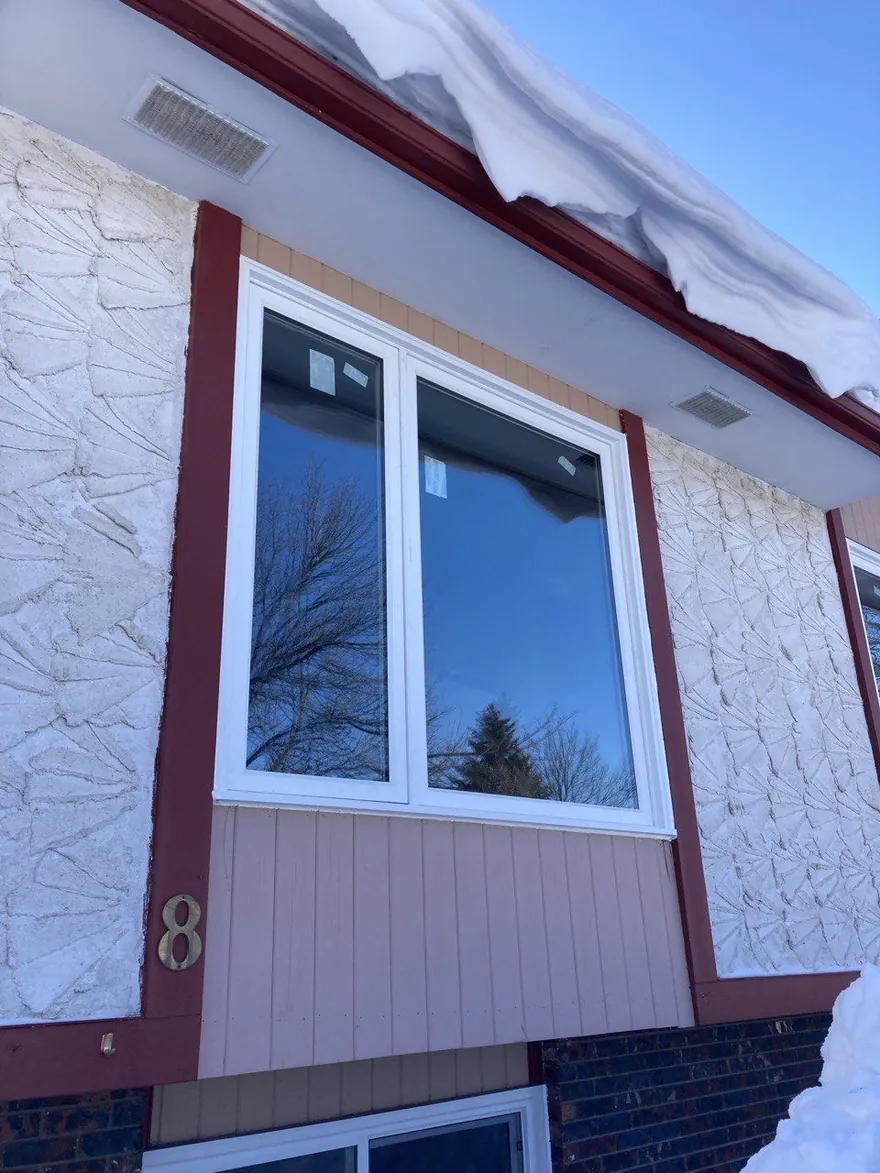
- Spring. Snow melt is leak season. Heat escaping through the roof melts the snow, the water refreezes at the cold roof edge, and that ice dam holds back meltwater that can leak into the wall. CAA Manitoba suggests raking snow off the roof as it builds up and getting a professional to deal with ice dams (CTV News). Use a roof rake from the ground, not a ladder. The long-term fix is in the attic: sealing air leaks and adding insulation keeps the roof cold, so the snow doesn’t melt and refreeze. Shovel snow away from the walls and out of window wells before it melts.
- Summer. June is usually Winnipeg’s wettest month, and summer storms drive rain sideways into seals and weep holes. Check the caulking and clear the tracks before storm season.
- Fall. Clean the leaves out of eavestroughs and window wells, and re-caulk any cracks before freeze-up.
- Winter. Frost on old windows melts onto the sill. It isn’t a leak, but it can rot the sill just the same. Watch for ice building up along the roof edge.
We replace windows across Winnipeg and nearby towns such as Selkirk, Steinbach and Oakbank: see our service areas. All our windows are triple-pane, ENERGY STAR certified and made in Canada. See our windows.
Common questions
Why does my window only leak in heavy rain?
Heavy, wind-driven rain pushes water past worn seals and fills the drainage faster than it can empty. Light rain simply runs off. Check the caulking, the weatherstripping and the weep holes first.
Can a new window leak?
Yes, if the opening wasn’t flashed and sealed properly, or if the weep holes are blocked. If a newer window leaks, call the company that installed it first and ask what their warranty covers.
Is a leaking window an emergency?
Not usually, unless water reaches wiring or a heater: then switch off that circuit at the panel right away. Otherwise, dry the area within 48 hours, find the source on the next dry day, and fix it before water gets into the wall and rots the wood.
Is your window past repair?
Book your estimate