
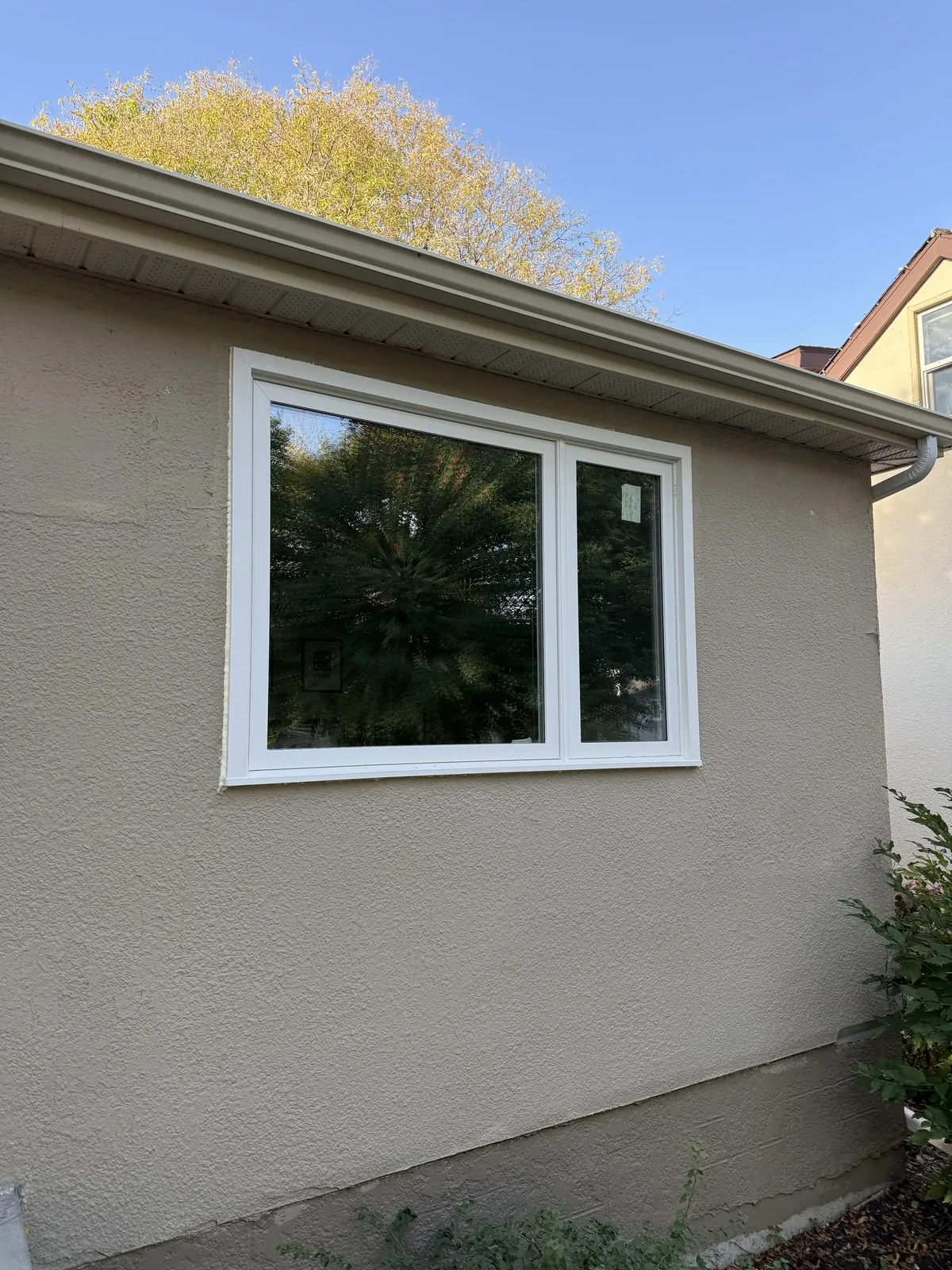
Choose replacement windows for a Manitoba home one decision at a time: frame material, glass, a style for each room, the ratings on the label, the installation method, the installer and warranty, colour and grilles, and budget. In our climate the first two are nearly settled: an insulating frame such as vinyl, and triple-pane glass with Low-E coatings and argon. The decisions that deserve your time are the style in each room and the installation. Here’s how to make each one, what to ignore, and where to read more.
The short answer
- Frame: vinyl (PVC). It insulates, it never needs paint, and it usually costs less than wood or fibreglass.
- Glass: triple-pane with Low-E coatings and argon. The Efficiency Manitoba rebate requires triple-pane anyway.
- Style: a casement where you want a tight seal and the biggest opening, an awning over a sink or high on a bathroom wall, a picture window where it never needs to open, and a slider or single hung beside a deck or walkway and in most basements.
- Ratings: ENERGY STAR certified, which means a U-factor of 1.22 or lower or an Energy Rating (ER) of 34 or higher. Compare whole-window numbers only.
- Installation: know whether each quote is for an insert or a full-frame replacement, and who will do the work. A good window badly installed is a bad window.
Frame material: why vinyl suits Manitoba
The frame is the part of the window you touch, and it has to stay warm on the inside when it’s −30 °C outside. Natural Resources Canada explains the difference between materials simply: vinyl and fibreglass frames “have multiple interior chambers which can be foam-filled to increase efficiency”, while metal frames are less efficient “because metal conducts heat more readily” (NRCan).
| Frame | Insulation | Upkeep | Worth knowing |
|---|---|---|---|
| Vinyl (PVC) | Good: hollow chambers slow heat loss | Wash it. No painting | Moves with temperature more than other materials, so welded corners and careful installation matter |
| Wood | Good | Paint or stain has to be kept up; it rots where water sits | Common in older Winnipeg homes, and often the reason for replacing |
| Fibreglass | Good | Low; can be painted | Usually costs more than vinyl |
| Aluminum | Poor, unless the frame has a thermal break | Low | Old basement sliders are often aluminum; the frames run cold and collect frost |
Arctic Star installs vinyl windows only. Within vinyl, look for a multi-chambered frame with fusion-welded corners, which is how ours are built, and ask where the window is made. Ours are made in Canada. More in vinyl vs wood windows. If one quote says PVC and another says vinyl, they’re the same material: see PVC vs vinyl windows.
Glass: triple-pane, Low-E and argon
Most of a window is glass, so this is where most of the heat goes.
- Three panes. NRCan says triple-glazed products “are up to 50 percent more efficient than double glazed products”. The inside pane also stays warmer, which is what you feel when you sit beside it in January.
- Low-E coatings. A fine metal coating on the glass, designed “to reduce heat loss in winter and heat gain in summer by up to 30 percent” (NRCan). You can’t see it.
- Argon between the panes instead of air, to slow heat moving through the unit.
- Warm-edge spacers. The spacer holds the panes apart at the edge. Foam, plastic or stainless steel loses less heat there than aluminum, and the edge is where condensation starts.
Every window we install is triple-pane with Low-E glass and argon, so on our quotes this decision is already made. Laminated glass is available where noise or security matters. See triple-pane windows in Winnipeg and double-pane vs triple-pane.
One honest caution. New windows reduce condensation, but they don’t eliminate it, and NRCan’s Keeping the Heat In warns that many homeowners buy new windows only to find the problem gets worse, because the new windows seal the house more tightly and the humidity rises (NRCan). Keeping indoor humidity around 30% in cold weather is the main control. See how to stop window condensation.
Window style, room by room
Style decides how a window opens, how well it seals and how much of it is clear opening. NRCan’s technology primer gives the order: windows that don’t open are more airtight than ones that do, and hinged windows such as casements and awnings are more airtight than sliders.
| Room | What matters | Styles that fit |
|---|---|---|
| Bedroom | A way out in a fire | A casement, because the whole sash swings clear. A slider or single hung opens only half, so it has to be bigger |
| Kitchen, over the sink | Opening it at arm’s length across a counter | An awning or casement with a crank; a slider also works |
| Living room | View and light, with some fresh air | A picture window, alone or with a casement on one or both sides; a bay or bow |
| Bathroom | Privacy, and getting steam out | An awning set high on the wall |
| Basement | A wide, short opening in concrete | A slider, or an awning |
| Beside a deck or walkway | Nothing swinging out into the path | A slider or single hung |
Bedrooms come first. Every bedroom needs a window you can climb out of, unless it has its own door to the outside. The City of Winnipeg’s guide for basement bedrooms gives the size: an unobstructed opening of at least 0.35 m² (3.77 sq ft), with no dimension under 380 mm (15 in), that opens from the inside without tools (City of Winnipeg). When you change styles, measure the clear opening of the new window, not its frame. See the egress window rules in Manitoba. We replace windows in existing openings; we don’t enlarge them or cut concrete.
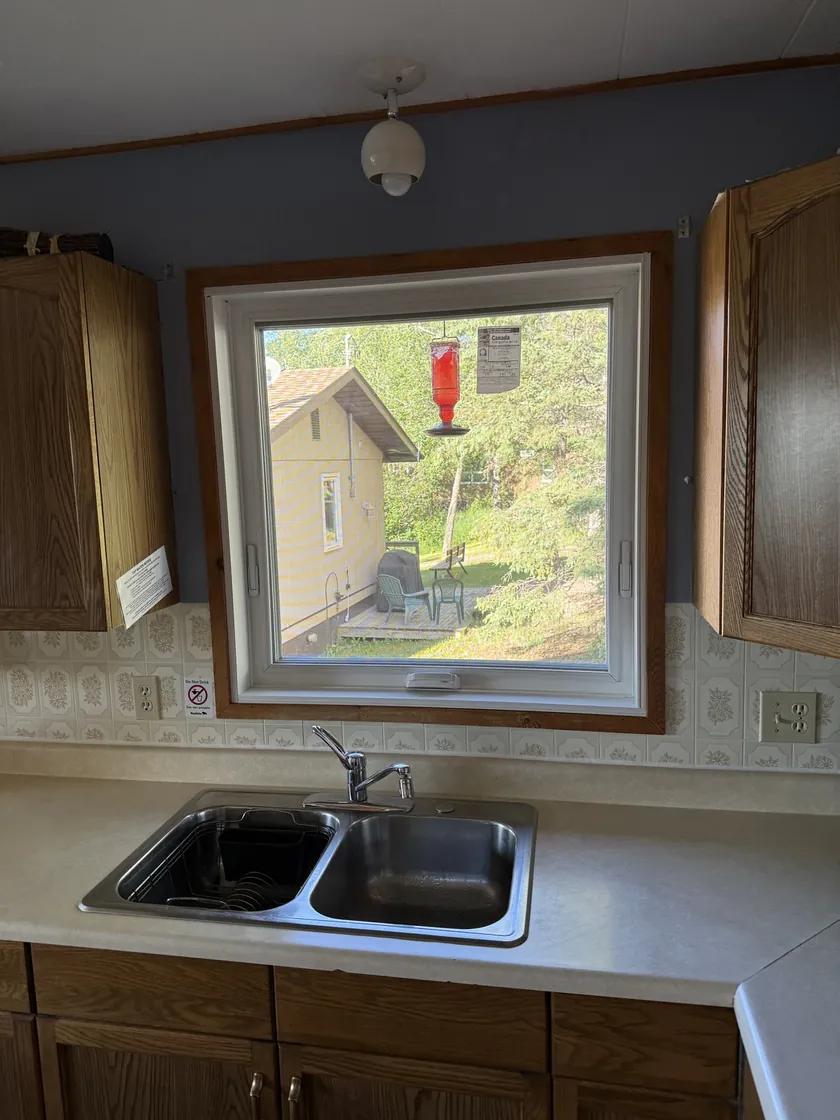
A few details that help. Our casements have multi-point locks and fold-down crank handles, which stay out of the way of blinds. Our hung windows are single hung: the bottom sash slides up and tilts in for cleaning, and the top is fixed. In a bathroom, ask whether a window beside the tub needs tempered glass. For the full comparison, see casement vs sash vs slider windows, and for single rooms, kitchen windows over the sink, picture windows for a living room and basement window replacement.
The ratings to compare on the label
- ENERGY STAR. To be certified in Canada, a window needs a U-factor of 1.22 W/m²·K or lower, or an Energy Rating of 34 or higher (NRCan). Treat it as the minimum, not the goal.
- U-factor. How fast heat passes through the whole window. Lower is better.
- Energy Rating (ER). One number that balances U-factor, solar heat gain and air leakage. Higher is better.
- Ignore centre-of-glass numbers and R-values. A centre-of-glass rating covers only the glass, not the frame and edges, and NRCan notes that R-value isn’t part of the energy standards even though sales staff often quote it (NRCan).
Ask for each model’s NRCan reference number on the quote. You’ll need it on the invoice to claim the rebate. Our guide to U-factor, ER and ENERGY STAR shows how to read a label.
Installation: the method, the installer and the warranty
- The method. An insert sets the new window inside the old frame. It costs less and disturbs less trim, but you lose some glass, and it only makes sense if the old frame is sound. A full-frame replacement takes everything out to the rough opening, so the gap can be insulated and sealed. Ask which one each quote is for. See what a window installation includes and retrofit vs full-frame, step by step.
- The installer. NRCan’s advice is to use a professional installer, get three quotes when possible, and check that there is plenty of low-expansion foam around the new windows (NRCan). Ask whether the crew are employees or subcontractors. Ours are our own.
- The warranty. Ask how long it lasts, what it covers and whether it passes to the next owner. Ours is a lifetime transferable warranty, plus a lifetime accidental glass breakage warranty.
For the questions to put to each company, see how to choose a window company in Winnipeg.
Colour and grilles
- Colour. White is standard. A painted exterior colour, from more than 30 choices, costs about 18% more than white in our price calculator. Choose it with the roof, trim and front door in mind, because you’ll live with it far longer than a paint job.
- Grilles. Ours sit between the panes, so there’s nothing to clean around. They suit older houses that had divided panes; plain glass suits most bungalows and newer homes. If in doubt, put them on the street side only.
- Trim. Inside, jamb extensions can be vinyl, PVC, wood or a drywall return. Outside, brickmould comes in several widths. Decide these before you compare quotes, because they change the price.
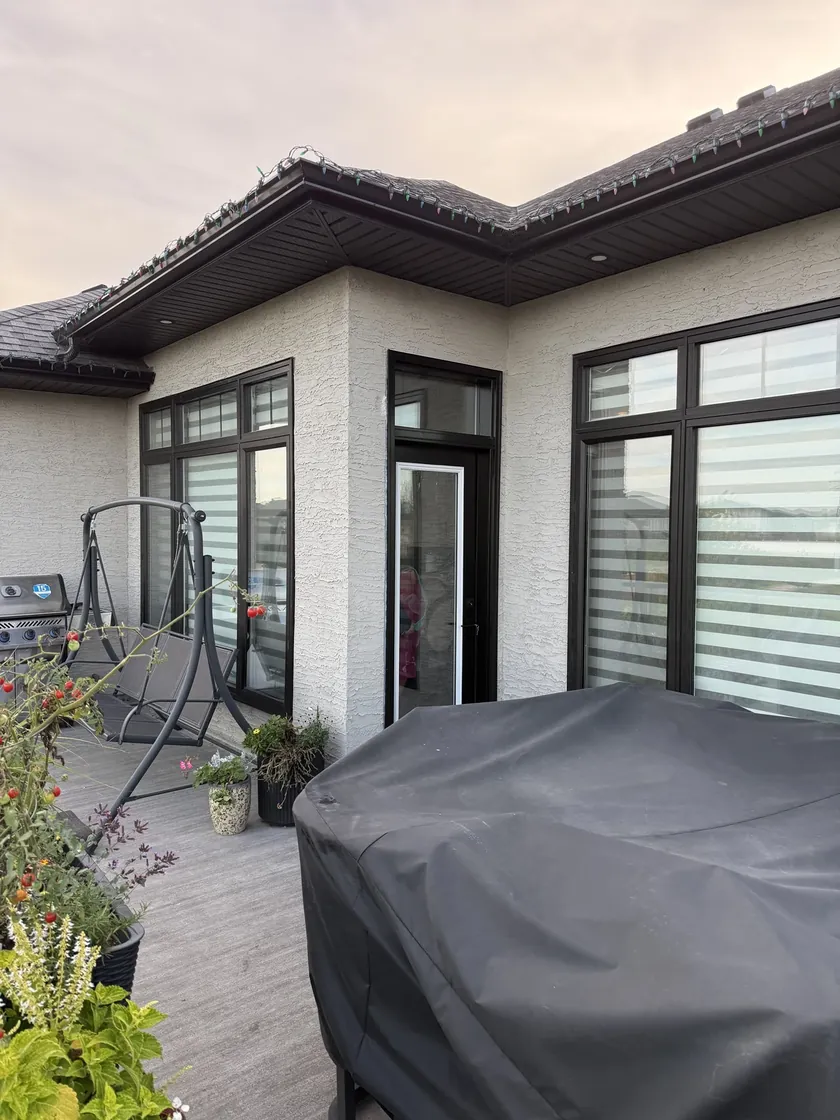
More ideas in window and door colours.
Budget: what replacement windows cost
Three common styles, installed:
| Window | Small | Medium | Large |
|---|---|---|---|
| Casement | $750 – $1,150 about 24″ × 40″ | $850 – $1,300 about 30″ × 48″ | $950 – $1,450 about 36″ × 56″ |
| Single hung | $600 – $900 about 28″ × 36″ | $700 – $1,050 about 32″ × 45″ | $900 – $1,300 about 36″ × 60″ |
| Slider | $550 – $800 about 30″ × 17″ | $600 – $900 about 36″ × 22″ | $800 – $1,200 about 48″ × 36″ |
Ranges are installed prices before tax and rebates, white frames, based on Arctic Star’s own current quotes — the same numbers as our price calculator. Your exact price comes after a free in-home measure.
To save without regret, make the windows you never open fixed, keep white, and keep every opening the same size. Don’t save on glass or installation. For every style, see the full price guide; for a whole house, see the cost to replace all the windows in a house. As of November 2026, the Efficiency Manitoba rebate pays $100 per eligible opening, and Manitoba Hydro’s loan can spread up to $7,500 over up to 5 years.
Checklist: how to choose replacement windows
- Frame: vinyl, multi-chambered, with fusion-welded corners
- Glass: triple-pane, Low-E, argon, warm-edge spacers
- Label: ENERGY STAR, with the whole-window U-factor or ER written on the quote
- NRCan reference number listed for each model
- A style chosen for each room, and which sections open
- Every bedroom keeps a window big enough to climb out of
- Nothing swings out over a deck, walkway or stairs
- Insert or full-frame stated for each opening
- Who installs, and how the gap around the frame is insulated and sealed
- Interior jamb and casing, and exterior brickmould, spelled out
- Colour and grilles confirmed
- Warranty: length, coverage, transferable or not
- Price: installed, with tax, removal, disposal and rot repair accounted for
- Financing approved before anything is ordered; rebate applied for within 90 days of installation and payment
Common questions
What is the best type of replacement window for a cold climate?
A triple-pane window with Low-E coatings and argon, in an insulating frame such as vinyl, that is ENERGY STAR certified. For style, fixed windows are the most airtight and hinged windows such as casements and awnings seal tighter than sliders, according to Natural Resources Canada.
Should I choose double-pane or triple-pane replacement windows?
In Manitoba, triple-pane. Natural Resources Canada says triple-glazed products are up to 50 percent more efficient than double-glazed ones, the inside glass stays warmer, and the Efficiency Manitoba rebate only applies to triple-pane windows. Arctic Star installs triple-pane windows only.
What ratings should I look for on replacement windows?
Look for ENERGY STAR certification, which in Canada means a U-factor of 1.22 W/m²·K or lower, or an Energy Rating of 34 or higher. A lower U-factor and a higher ER are better. Compare whole-window ratings, not centre-of-glass numbers or R-values.
Which window style is the most energy-efficient?
A fixed picture window, because it has no moving sash to leak. Among windows that open, casements and awnings close against a compression seal and are more airtight than sliders. With triple-pane glass in every one of them, choose the style that suits the room.
Do bedroom windows have to open?
Yes, unless the bedroom has its own door to the outside. It needs at least one window that opens from the inside and is big enough to escape through. The City of Winnipeg’s guide gives an unobstructed opening of at least 0.35 m² (3.77 sq ft) with no dimension under 380 mm (15 in). Don’t replace a bedroom window with a fixed one or a smaller opening.
Will new windows stop condensation?
They reduce it, because the inside glass is warmer, but they don’t eliminate it. New windows also make a house tighter, so indoor humidity can rise. Keep relative humidity around 30% in cold weather and run your bathroom and kitchen fans.
Choosing windows for your own house?
At a free in-home estimate we measure every opening, go through style and colour room by room, and tell you which windows qualify for the rebate. Book online, or try the price calculator for a ballpark first.
Ready to choose your windows?
Book your estimate