
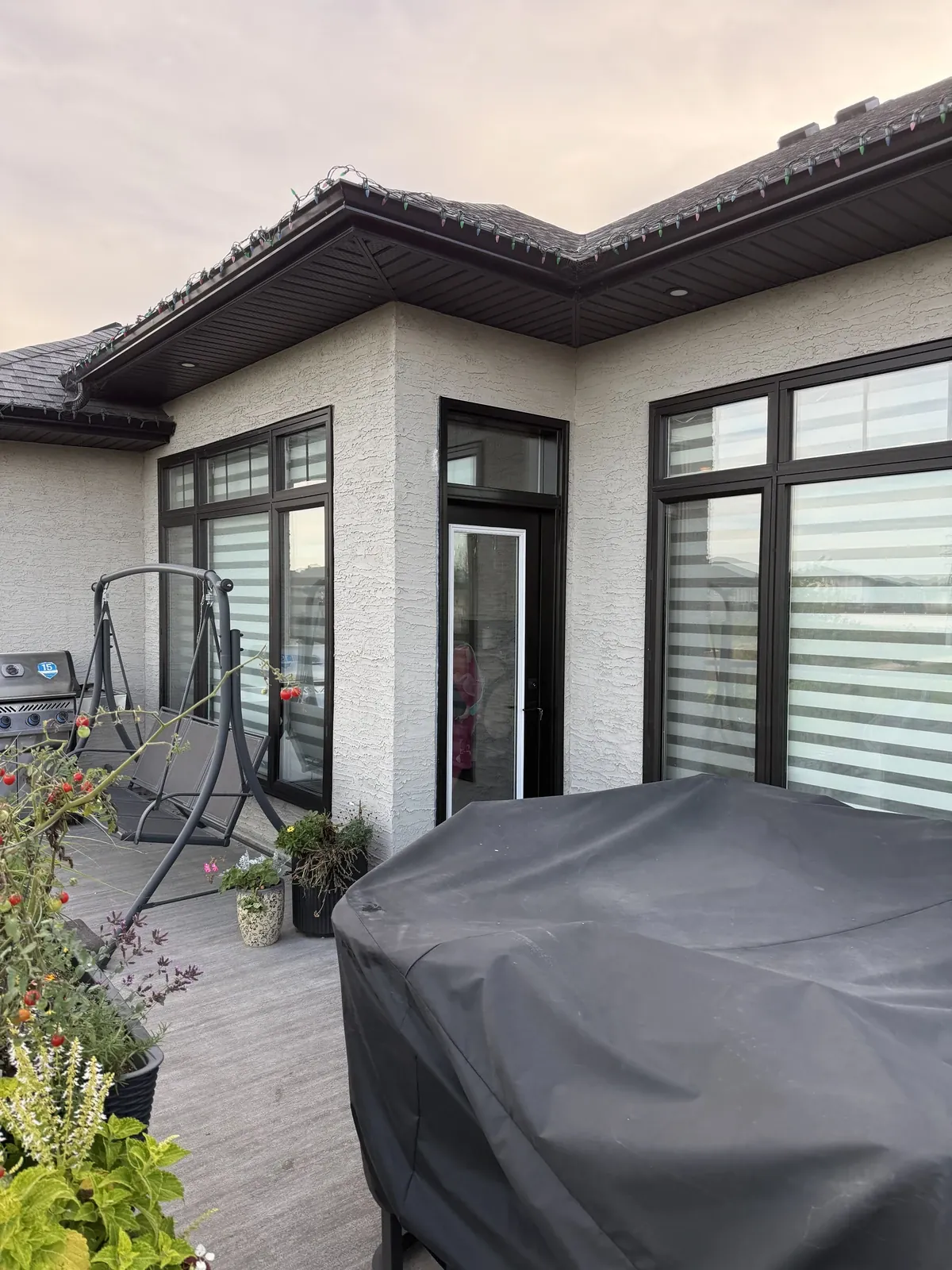
Window and door colours are harder to choose than paint, because you can’t redo them next summer. For most Winnipeg houses the safe formula is simple: one frame colour all the way round, trim that matches the frame, and a front door that carries the accent. Black and other dark frames can look excellent, but dark vinyl runs hot in the sun, so it needs a factory finish made for that. Here’s how to choose colours for your windows and doors, style by style, and how to preview them before you order.
The short answer
- White is the default for good reasons. It suits almost any wall, it’s the standard finish, and no buyer objects to it.
- A coloured exterior costs more. On our windows a painted exterior, from more than 30 colours, is about 18% more than white.
- Dark frames need a factory finish. In the sun, a dark vinyl frame can run roughly 28 to 33 °C hotter than the air around it.
- Match the trim to the frame unless you want the windows outlined.
- Grilles belong on houses that had divided windows. On houses that never did, they tend to date the place.
- Put the bold colour on the front door. It’s one item, and it’s what people look at.
White or a coloured exterior?
Our windows come in white as standard, or with a painted exterior in one of more than 30 colours. In our price calculator a painted exterior adds about 18% to the price of the window. For scale, a medium casement in white (about 30″ × 48″) is $850 – $1,300 installed.
Ranges are installed prices before tax and rebates, white frames, based on Arctic Star’s own current quotes — the same numbers as our price calculator. Your exact price comes after a free in-home measure.
White earns its place. It reads as trim against stucco, siding and most brick, it doesn’t show dust or water spots the way a dark frame does, and it’s what the neighbours and the next buyer expect. Its weak spot is contrast: white frames on white stucco, in a yard that’s white with snow for months, can leave a house looking flat. A strong door colour usually fixes that for far less money than coloured windows.
Colour is worth paying for when:
- the wall is brick or stone and bright white looks stark against it;
- the design depends on contrast, as with dark frames on light stucco;
- you’re replacing only some windows and need to match brown, beige or black frames that are staying;
- the house has trim, soffits and eavestroughs in a colour that white windows would fight with.
Resale-safe choices are the quiet ones: white, black, and the earth tones in between, such as cream, beige, brown and charcoal. We don’t have evidence that any window colour raises a selling price. What colour can do is put buyers off, so if you expect to sell within a few years, pick something a stranger would also choose.
Black and dark window colours: look, heat and what to ask
Black frames outline the glass like a picture frame. They look sharpest against white or grey stucco and light brick, and they suit modern houses and simple shapes best. Before you commit, it helps to know what dark colour does to vinyl.
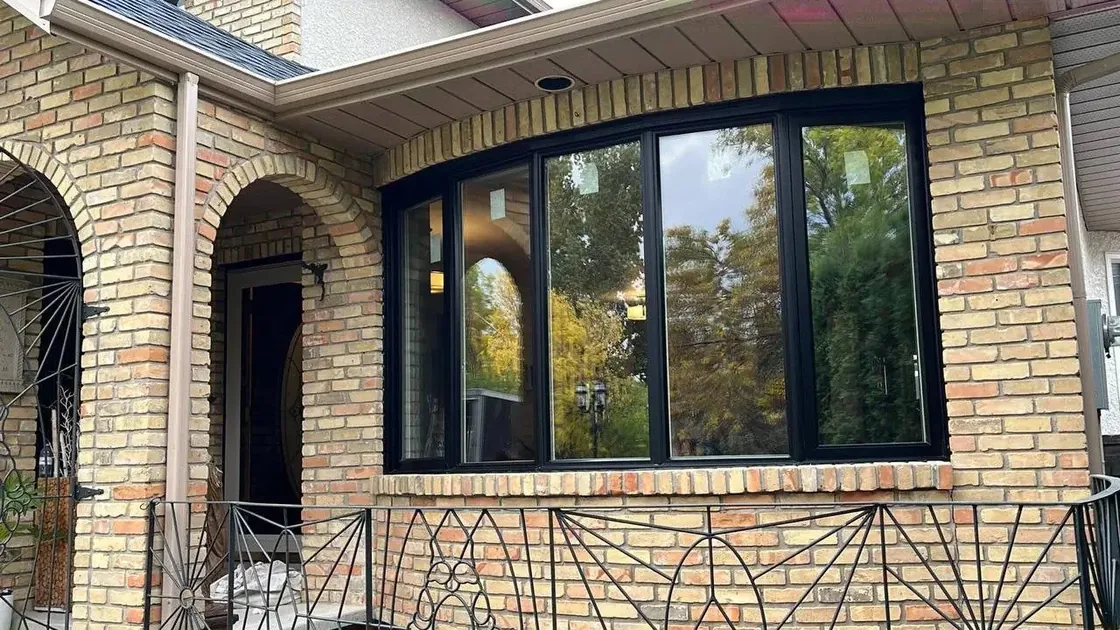
Dark vinyl gets hot. According to a 2026 article in the National Glass Association’s trade magazine, dark profiles can reach surface temperatures 50 to 60 °F (about 28 to 33 °C) above the surrounding air, and that heat stresses the material and affects how well it holds its shape (Window + Door). Vinyl also moves with temperature more than other frame materials: rigid PVC expands by 50 to 63 millionths of its length per degree Celsius (National Research Council Canada). A hotter frame is a frame that grows more.
That’s why the finish has to come from the factory. The same article describes three ways dark colour is put on vinyl: a coloured outer layer fused to the profile as it’s made, with pigments that reflect heat; an acrylic film bonded to the surface; and paint formulated for vinyl, which can scratch through to the white underneath. Makers test dark finishes for heat build-up (ASTM D4803) and cycle whole windows under infrared heat to check for warping (AAMA 1506).
What to ask before ordering dark frames:
- Is this a factory finish, and which kind: fused layer, film or paint?
- Is the colour itself covered by the warranty, in writing?
- If it gets scratched, how is it touched up?
- Is the colour on the outside only, and what colour is the frame indoors?
- Will the brickmould and capping be the same colour?
- Which windows face south and west? Those take the most sun.
One firm rule: don’t paint white vinyl a dark colour yourself. It wasn’t made for that heat. Our guide to PVC and vinyl windows has more on how the material behaves.
Matching the trim, brickmould and capping
Three things around a window have a colour, and they’re easy to confuse:
- The frame and sash: the window itself.
- Brickmould: the exterior trim that covers the joint between the window and the wall. We offer it in several widths.
- Capping: thin aluminum bent to cover older wood trim, so it never needs painting.
When all three match, the window reads as one clean shape and the glass looks larger. That’s the usual choice on stucco, where the brickmould is the only trim there is. When the trim contrasts with the frame, such as white trim around a dark sash, the window looks outlined and more traditional, which suits houses with wide trim boards.
Look past the windows too. Fascia, soffits, eavestroughs and the garage door already have colours, and so do the things you can’t change at all: the roof, the brick, the stone. Pick window colours that agree with those. Ask for the capping colour to be named on the quote, because “close enough” brown next to a brown frame is the mistake you’ll see every day.
Grilles: when they suit a house and when they date it
Grilles are the bars that divide a window into smaller panes. Ours sit between the panes of glass, so there’s nothing to dust or paint.
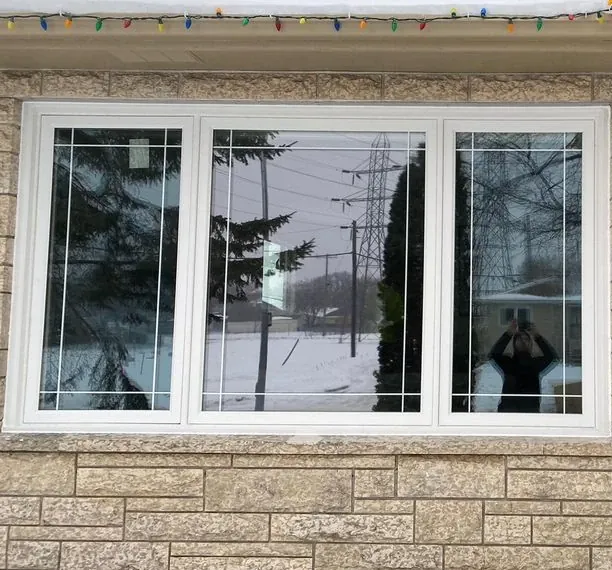
- They suit character homes and two-storeys with a traditional look, especially on the street side, when the pattern follows what the house had: a grid in the upper sash, or a border around the edge.
- They date a house when they’re added where there never were any: a full grid across a bungalow’s picture window, or on modern stucco with black frames, where plain glass is the point.
- They cost you view. Skip them on windows you look out of, like the kitchen sink and the back of the house. Putting grilles on the front only is common and looks deliberate.
If your building is designated heritage, between-the-glass grilles won’t pass: Manitoba’s guidelines for historic buildings say muntins attached only inside or between the panes “are not acceptable” (Province of Manitoba and City of Winnipeg).
The front door colour as the accent
If the windows are the frame of the house, the door is the one place for a statement. It’s a single item, visitors look straight at it, and a strong colour there doesn’t commit the whole house.
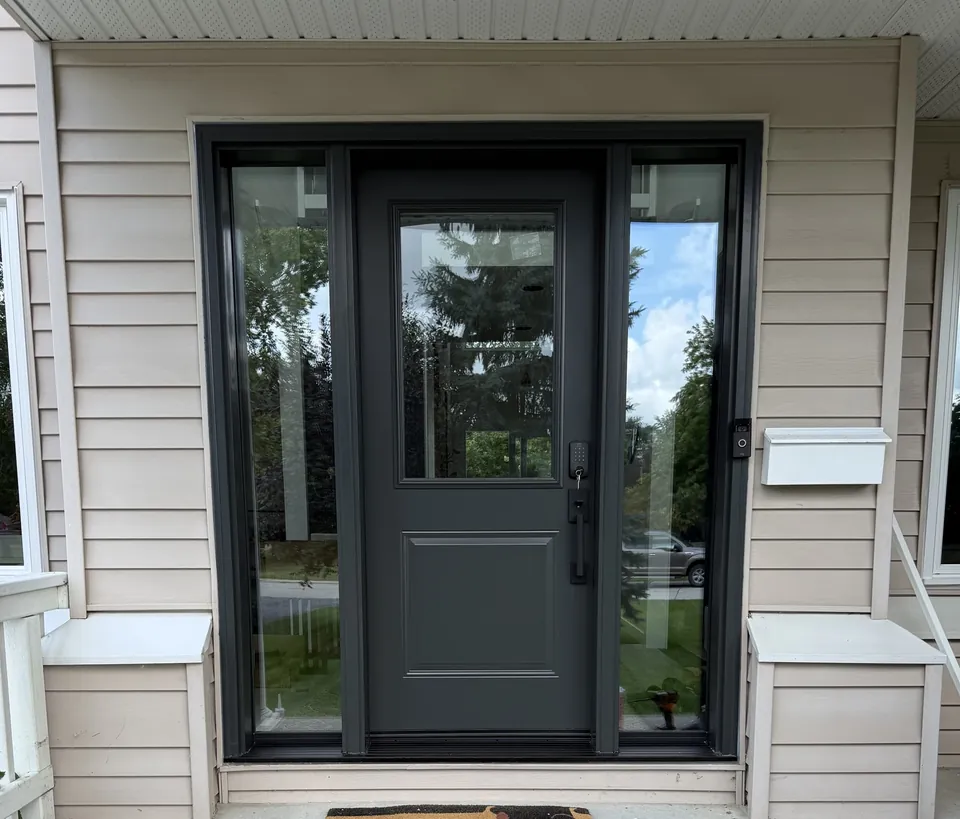
- The range. Our Novatech steel entry doors come in 34 colours, plus custom colours, with more than 30 decorative glass designs.
- Coordinate, don’t match. With white windows, almost any door colour works. With black windows, a black or charcoal door is calm, and a wood tone or a deep colour is warmer.
- Carry it through. Sidelites and the door frame usually take the door’s colour. A storm door in front should match it or disappear, so choose the two together.
- Mind the sun. A dark door behind a glass storm door on a sunny wall can get very hot. Novatech’s steel door warranty is void behind a storm door that isn’t ventilated, because of the risk of extreme heat build-up; to count as ventilated, the storm door needs a screen covering at least half its height (Novatech’s steel door warranty). Choose the door and storm door together.
Door styles, glass and hardware are a subject of their own: see elegant entry doors, or browse our entry doors.
Front and back: does everything have to match?
One frame colour on every side is the safest answer, and it matters most on a corner lot, where two sides face the street. If the budget won’t stretch to colour everywhere, these are the rules that keep it looking intentional:
- Never mix colours on one wall. Each side of the house should be all one colour.
- Change at a corner, not partway along.
- Think about the yard. You see the back of the house more than anyone, so a coloured street side with a white back is a saving you’ll notice from the deck.
- Include the patio door. It’s the largest frame on the back wall. Our Novatech 550 sliding patio door comes in more than 100 colours, so it can follow the windows. See patio doors.
- Doing the house in stages? Choose the colour for the whole house now and write it down, so the second phase is ordered to match the first.
What suits common Winnipeg house styles
| House | What usually works | Be careful with |
|---|---|---|
| Stucco bungalow | White or cream frames with matching brickmould and a strong door colour. Dark frames if the stucco is light and plain. | Grilles across a wide front window that never had them. |
| Brick house | A colour drawn from the brick or mortar: cream or beige on buff brick, white or black on red. | Bright white beside yellow brick, which can look cold. |
| Two-storey with siding | Frames that match the trim boards. Black or charcoal with white or grey siding; white with coloured siding. | A third colour. Siding, trim and door are already three. |
| Character home | Traditional colours, grilles in the original pattern on the street side, and windows that keep their proportions. | Losing the divided look. Check whether the building is designated first. |
| Modern stucco or infill | Black or charcoal frames, no grilles, minimal trim. | Ornate door glass that fights the plain lines. |
A word on character homes in older neighbourhoods such as Wolseley, Crescentwood and River Heights. If the building is on the City’s List of Historical Resources or in a Heritage Conservation District, you may need a heritage permit before changing the windows (City of Winnipeg), and the provincial and City guidelines call for replacement windows that match the originals in size, shape, material and proportions. That usually means wood. Our comparison of vinyl vs wood windows covers where we fit and where we don’t.
How to preview colours before you order
- Look at real houses. Our gallery shows our own installations in and around Winnipeg, in white, black and colours, on stucco, brick and siding.
- Drive your own neighbourhood. Find houses like yours and note what you like at 50 km/h and what you like standing on the sidewalk. They’re often different.
- Hold a sample against your wall. Ask for physical colour samples, and look at them outdoors against the stucco, brick or siding, in morning and afternoon light and on a cloudy day. A colour chart on a phone screen is not the colour.
- Picture it in January. For months the background is snow and bare branches. Dark frames stand out more in winter and white ones less.
- Mock it up. Print a straight-on photo of the house and colour the frames in, or do the same on a tablet. It’s crude, and it settles most arguments.
- Decide the door last. Once the windows and trim are fixed, the door colour is the easy and enjoyable part.
Common questions
What colour windows are best for resale?
Neutral ones. White is the safest because it suits nearly every house and nobody objects to it; black, cream, beige, brown and charcoal are also widely accepted. No window colour is proven to raise a selling price, so the goal is to avoid a choice that narrows the pool of buyers.
Are black windows going out of style?
Black frames are fashionable now, and fashions change, so it’s fair to ask. They’ll age best on houses they suit: modern designs, light stucco and light brick, with simple shapes and no grilles. On a house where black is fighting the style, white or an earth tone will still look right in twenty years.
Do black vinyl windows warp or fade in the sun?
Dark vinyl does run hotter: in strong sun it can reach about 28 to 33 °C above the air temperature, and vinyl expands as it warms. A factory finish made for dark colours is designed and tested for that heat. Ask which kind of finish it is and whether the colour is covered by the warranty, and never paint white vinyl dark yourself.
Should window frames match the trim or the front door?
Match the frames to the trim, not to the door. Frames, brickmould and capping in one colour make the window read as a single clean shape. The front door is the accent, so it can be a different, stronger colour that goes with the windows without copying them.
Should all the windows on a house be the same colour?
Ideally, yes. If you mix, keep each wall to one colour and change only at a corner. A coloured street side with white at the back is a common way to save money, but remember you’re the one who sees the back most.
Do coloured windows cost more than white?
Yes. On our windows, a painted exterior colour adds about 18% to the price of the same window in white. Grilles and decorative door glass also add to the price, so ask for each option to be shown separately on the quote.
Can I paint my vinyl windows a different colour?
We don’t recommend it, especially not a dark colour over white vinyl. The darker surface absorbs more heat than the frame was made for, which can lead to warping, and some window makers void the warranty if the vinyl is painted. If you want a different colour, order it as a factory finish.
Choosing colours for new windows and doors?
At a free in-home estimate we measure, quote, and go through the colour, trim, grille and door options for your house. Our windows are triple-pane vinyl, made in Canada, in white or with a painted exterior, and our Novatech steel doors come in 34 colours. Book an estimate online, or get a ballpark first with the price calculator.
Choosing colours for new windows and doors?
Book your estimate