
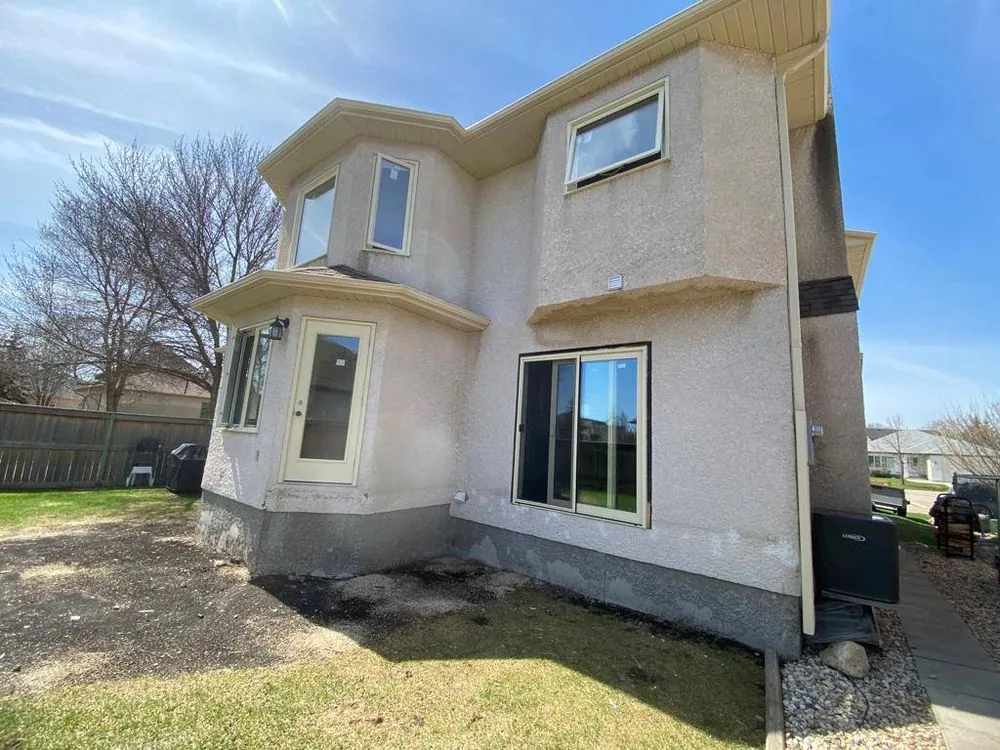
PVC windows and vinyl windows are the same thing. “Vinyl” is the everyday North American name for rigid PVC (polyvinyl chloride), and “uPVC” is the European name for the same rigid plastic. What does differ from one vinyl window to the next is how the frame is designed, what glass goes in it, how it is finished and how it is installed. Here’s what to look for in a Winnipeg winter.
PVC, uPVC, vinyl: three names for one material
PVC comes in two forms. Flexible PVC, used for things like garden hoses, has plasticizers added to make it bend. Window frames use rigid PVC with no plasticizer. Europe calls that rigid material “uPVC” or “PVC-U”, meaning unplasticized; North America calls it rigid PVC or simply vinyl. The European standard for window profiles and the North American one (AAMA 303) both describe the same unplasticized material. As building-science writer Martin Holladay put it about PVC, uPVC and vinyl frames: “It’s all the same stuff” (Green Building Advisor).
A typical North American vinyl window profile is made of (Habitable / Pharos):
| Ingredient | Share by weight | What it does |
|---|---|---|
| PVC resin | About 82% | The plastic itself |
| Titanium dioxide | About 7.5% | White colour and protection from the sun’s UV |
| Impact modifier | About 4% | Makes the frame tougher |
| Calcium carbonate | About 4% | Filler |
| Heat stabilizers, lubricants and processing aids | About 2.5% | Help shape the profile and keep it stable |
There is no plasticizer in the list. The same source says that, according to the vinyl industry, lead-based stabilizers are no longer used in rigid vinyl in the US, though they are still sold for window profiles elsewhere.
How vinyl handles cold and heat
Vinyl insulates well, and it doesn’t rot, rust or need painting. It does have three habits that matter in Manitoba:
- It moves with temperature. Rigid PVC expands and shrinks about 50 to 63 millionths of its length per degree Celsius (NRC). That is two to three times as much as aluminum and five to seven times as much as glass. That is why a vinyl window is fastened and sealed to allow some movement, with flexible foam and sealant rather than rigid fillers.
- It gets less impact-resistant in deep cold. Plastics grow stiffer and stronger as they cool, but they take a sharp blow less well (NRC). Normal winter use is fine; a hard knock at −30 °C is more likely to crack a frame than the same knock in July. That is why vinyl compounds include impact modifiers, and why European profiles are impact-tested at −10 °C.
- Dark colours get hot. In the sun, dark frames can run 28 to 33 °C hotter than the air around them (Window + Door), and vinyl starts to soften at around 60 °C. More on colours below.
What separates a good vinyl window from a cheap one
Two windows can both be “vinyl” and perform very differently. NRCan notes that a window’s overall efficiency depends more on its design than on the frame material (NRCan). Look at:
- The profile. Look at a corner sample: a good frame has several hollow chambers inside, which insulate and stiffen it. Chamber count alone isn’t a quality score, but a thin, single-chamber profile is a warning sign.
- The corners. Fusion-welded corners are melted together into one piece, so they are much less likely to open up and leak than screwed or glued joints.
- Stiffness for big sashes. Large windows, meeting rails and joined units may need thicker walls, reinforcement or mullions. Ask how a big window is reinforced.
- The glass. The glass is most of the window. Triple-pane glass with Low-E coatings and argon makes the biggest difference to comfort, and the Efficiency Manitoba rebate requires triple-pane. See what U-factor and ER mean.
- The seals and hardware. Compression weatherstripping and a lock that pulls the sash tight keep the wind out.
- The install. A great window installed badly will still be drafty. The insulation and sealing between the frame and the wall matter as much as the window itself.
The labels to check
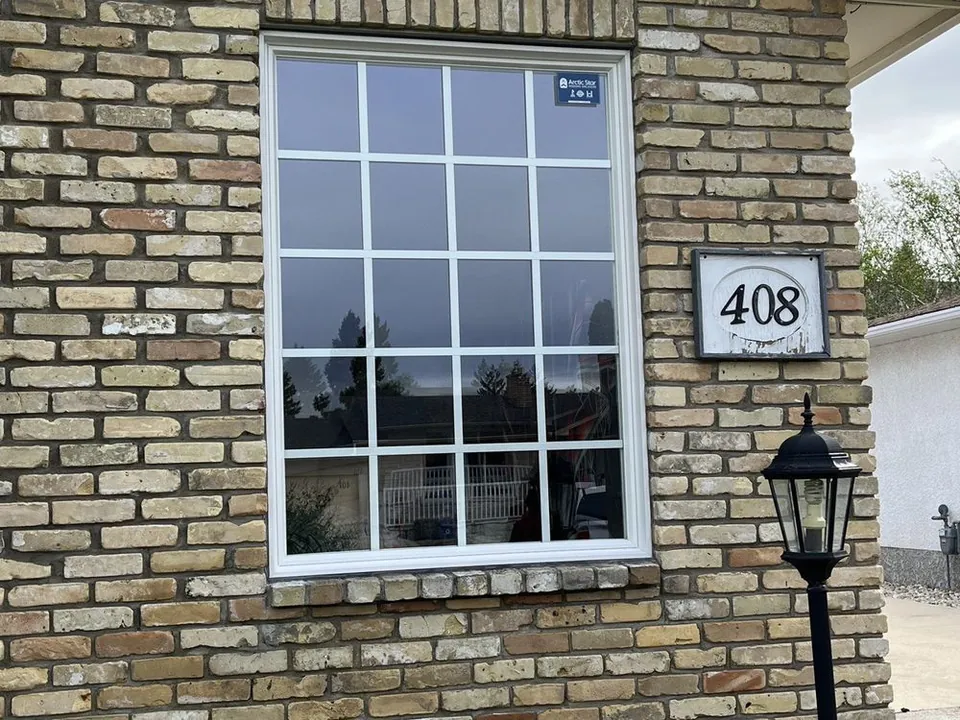
- ENERGY STAR. In Canada a window qualifies with a U-factor of 1.22 or lower, or an Energy Rating of 34 or higher, and limited air leakage (NRCan). A stricter version has been proposed for 2029; it is still a draft.
- The performance label. Windows sold in Canada are tested to the North American Fenestration Standard with a Canadian supplement. The label gives a performance class (R for residential), a performance grade such as PG40 for wind pressure, the water-test pressure, and an air leakage level: A2 is the minimum and A3 is tighter (Construction Canada). Our Novatech 550 patio door, for example, is rated R-PG40 with air level A3.
Colours and finishes
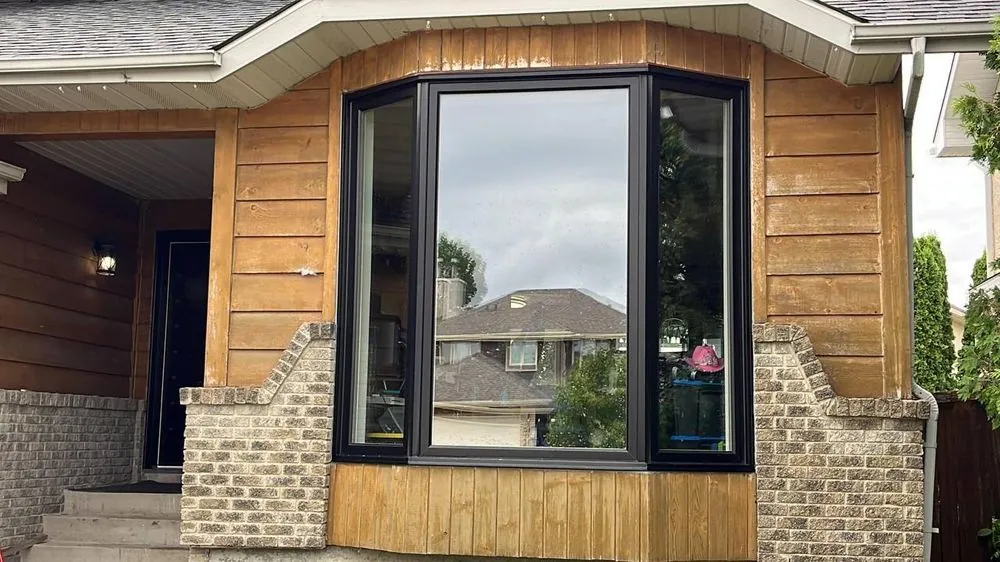
Vinyl doesn’t have to be white. Factory finishes come three ways: paint, a coloured outer layer (capstock), or a laminate film. Because dark frames heat up so much in the sun, dark colours need finishes made for it, such as paints that reflect heat. Don’t paint white vinyl a dark colour yourself: it can overheat and warp, and some window makers void the warranty if the vinyl is painted.
Our windows come in white as standard, or with a painted exterior colour from more than 30 choices. In our online price calculator, a window with a painted exterior costs about 18% more than the same window in white.
How long vinyl windows last
There’s no official lifespan for vinyl windows, and figures on sellers’ websites are guesses. What makes the difference is the quality of the profile and the glass seal, how well the window was installed, the colour, and the knocks it takes. Simple care helps: keep the tracks and weep holes clean, and wash the frames with mild soap. Our windows are backed by a lifetime transferable warranty.
Are vinyl windows green?
The honest answer is mixed. In use, vinyl windows insulate well and need little upkeep, which saves energy for decades. At the end of their life, they can be recycled, but mostly they aren’t yet in Canada:
- Through the European PVC industry’s VinylPlus program, almost 766,000 tonnes of PVC were recycled in 2025. More than half of it, almost 417,000 tonnes, came from window profiles (MacPlas).
- Canada’s first program for recycling old vinyl windows, Project Win-Finity, started as a pilot in the Toronto area in September 2025 (Waste & Recycling).
For our part, we plant a tree for every window and door we install.
Vinyl vs fiberglass, aluminum and wood
| Vinyl | Fiberglass | Aluminum | Wood | |
|---|---|---|---|---|
| Heat through the frame | Low | Low | High, unless thermally broken | Low |
| Movement with temperature | Most | Close to glass | Moderate | Little along the grain |
| Upkeep | Little | Little | Little | Regular painting or staining |
| Dark colours | Factory finishes made for heat | Paint | Paint | Paint or stain |
Sources: NRCan, the US Department of Energy’s window guide and NRC.
For most Manitoba homes, a well-made triple-pane vinyl window is the best balance of comfort, upkeep and price, and it is the only kind we install. All our windows have multi-chambered, fusion-welded vinyl frames and triple-pane glass with a Low-E coating and argon. They are ENERGY STAR certified, made in Canada, and qualify for the Efficiency Manitoba rebate. Read more in vinyl vs wood windows, see our windows, or get a ballpark price with the calculator.
Common questions
Is uPVC the same as vinyl?
Yes. uPVC, or PVC-U, means unplasticized, rigid PVC: the same material North Americans call vinyl.
Do vinyl windows crack in extreme cold?
Not in normal use: well-made frames are built for Canadian winters. Vinyl does get less impact-resistant as it gets colder, so a hard knock at −30 °C is more likely to crack a frame than the same knock in summer.
Can I get black vinyl windows?
Yes. Dark colours need a factory finish made to handle the heat they absorb, so ask us which dark colours are available for the window you choose. Don’t paint white vinyl dark yourself: it can warp, and some window makers void the warranty if the vinyl is painted.
Want to compare windows side by side?
Book your estimate