
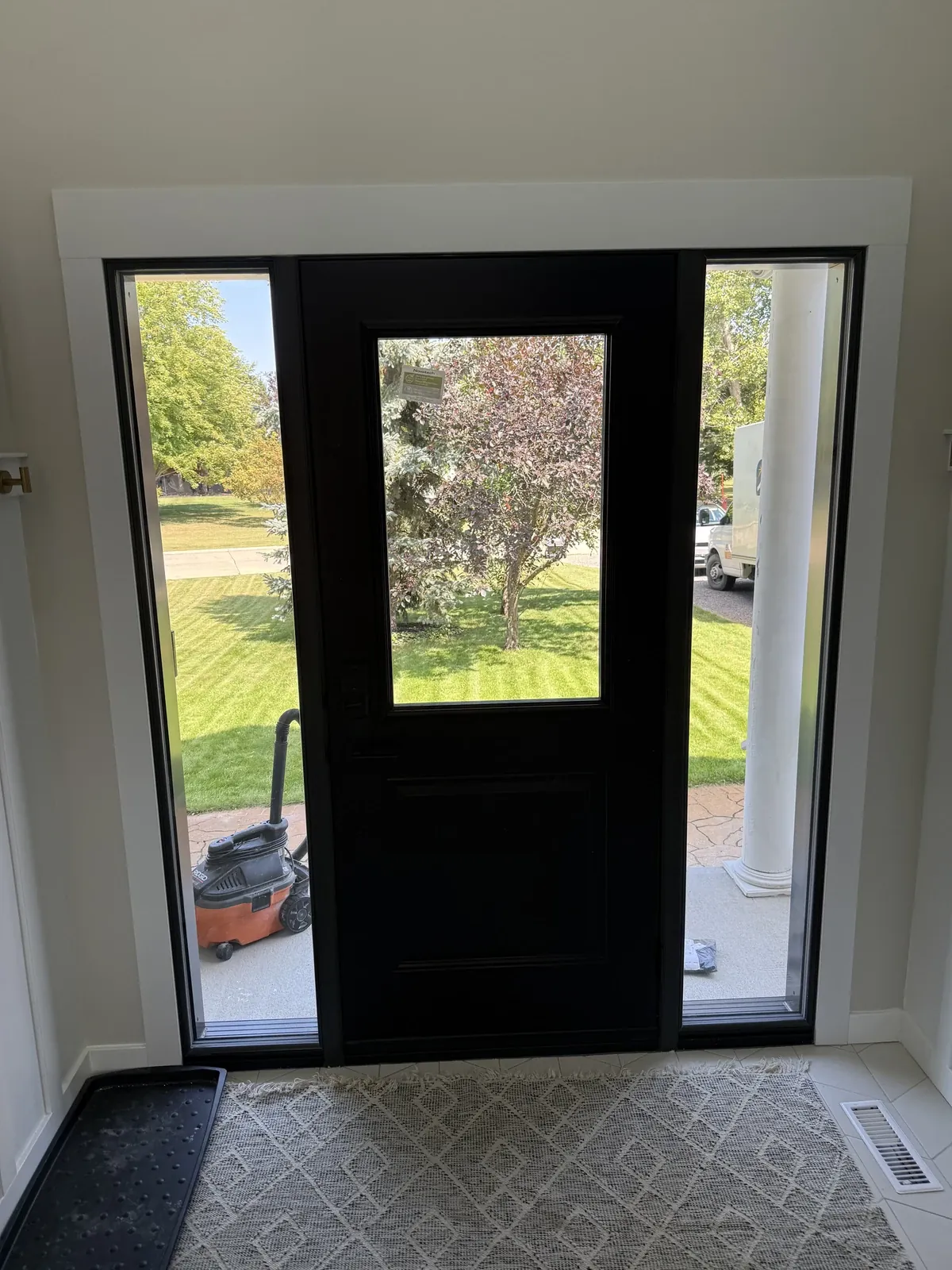
To secure windows and doors, start where break-ins start: an unlocked door, a door frame that splits at the lock, a sliding door that lifts off its track, a ground-level window held by one small latch. Most of the fixes cost a few dollars and an hour of your time. This guide shows where each weak point is, what to do about it this weekend, and what a new door or window adds, without blocking the bedroom windows you’d need in a fire.
The short answer
- Lock up, even when you’re home. Police describe home break-ins as crimes of opportunity.
- On a hinged door, the frame is the weak point, not the slab. Long screws through the strike plate and hinges into the wall framing are the cheapest security upgrade in the house.
- Use a deadbolt with at least a 1-inch throw, and use it every time.
- On a sliding patio door, stop two movements: lifting (screws in the top track) and sliding (a bar or a hockey stick in the bottom track).
- Give sliding and hung windows a second lock. A locked casement with a multi-point lock is harder to pry.
- Never block a bedroom’s escape window.
How break-ins through doors and windows actually happen
Police services describe home break-ins in much the same way. The Toronto Police Service calls them crimes of opportunity and notes that “most residential break and enters happen during the day time when the homeowner is not home” (Toronto Police Service). A burglar wants the quickest, quietest way in. In practice that means:
- The unlocked door or window. The Winnipeg Police Service’s advice is to keep doors locked “even when you are home or in your yard” (Winnipeg Police Service).
- The forced door. A kick or a pry bar rarely breaks the door itself. It spreads or splits the frame until the bolt comes out of its strike plate. The National Research Council gives that as the reason for the building code’s rule on solid blocking behind the lock: intruders “trying to spread the frame away from the door” (NRC).
- The sliding door. “Burglars look for sliding glass doors because they are the easiest to open,” says the Toronto Police Service. An older one can sometimes be lifted off its track, and its latch is small.
- The window within reach. Basement and ground-floor windows, and upper windows beside a low roof. Ottawa police warn that a ladder left unlocked can be used to reach a second-storey window (Ottawa Police Service).
- Glass beside a lock. Break a small pane, reach in, turn the latch. Winnipeg police ask whether you have reinforced “any windows located in or next to doors.”
No door or window is burglar-proof. The aim is to make getting in slow, noisy and visible. That includes the yard: Ottawa police suggest trimming hedges below window level, so nobody can work on a window unseen.
Entry doors: secure the frame first, then the lock
Toronto police recommend exterior doors of metal or solid-core wood, and the insulated steel doors we install meet that. What the door locks into matters more. For how steel compares with other materials, see steel vs fiberglass entry doors.
The strike plate and its screws
Open the door and look at the strike plate, the metal plate in the frame that the bolt slides into. If two short screws hold it, they grip only the jamb, a thin board with a gap behind it. A kick splits the jamb long before it bends the bolt.
- Use long screws. Winnipeg police ask whether the screws that secure your entry doors and strike plates are at least 2½ inches long. Toronto police suggest at least a four-hole security strike plate, with screws long enough to reach “the main (unseen) structure that supports the door frame.”
- Do the hinges too. Swap one screw in each hinge, on the frame side, for a long one.
- Drill a pilot hole and stop when the screw is snug. Overtightening pulls the jamb toward the stud, and then the door rubs or the bolt misses.
Building codes set forced-entry minimums for the entry doors of new houses. Manitoba’s code is based on the National Building Code of Canada (Manitoba), and so is British Columbia’s, which BC publishes free online. BC’s version asks for a deadbolt with a throw of at least 25 mm (1 in), strike-plate screws that go at least 30 mm into solid wood, and solid blocking between the jamb and the wall framing at lock height (BC Building Code, 9.7.5.2). Use those as a benchmark: nobody inspects an old door against rules for new houses, so check yours.
On a new door, we offer an optional 16-inch steel security plate in the frame at the lock, which reinforces the jamb where the bolt enters.
The deadbolt
- Throw. Winnipeg police ask whether every exterior door has a deadbolt with at least a one-inch throw. The spring latch in the handle is not a lock.
- Multi-point locks. These latch the door to the frame at several points along its edge, so no single spot takes all the force. They’re available on our doors.
- No key on the inside. A deadbolt that needs a key from inside stops someone reaching in through broken glass, but it can also trap you in a fire. Choose a thumb-turn.
Hinges, glass and sidelites
- Hinges. On a door that swings in, the hinge pins are indoors. On one that swings out, they’re outside, which is why BC’s code calls for hinges or pins that can’t be removed while the door is closed. Our doors hang on ball-bearing hinges.
- Glass near the lock. If you’re ordering a door with one sidelite, putting it on the hinge side keeps glass away from the lock. For a sidelite you already have, a covering or privacy glass hides the lock from view, and security film helps hold a broken pane together.
- Seeing who’s there. Use a door viewer or the glass. Ottawa police say chain locks are not recommended as security.
When the frame itself has failed
Long screws need sound wood. If the jamb is cracked at the strike, soft at the bottom or loose in the wall, hardware won’t fix it. That calls for a new door and frame, which we always replace together as one unit. See when you can keep an old door frame and what a new entry door costs.
Sliding patio doors: stop the lift and the slide
- Stop the lift. Winnipeg police suggest screws in the top of the track “to prevent the door from being lifted out.” Drive two or three into the upper track above the closed panel, with the heads just clear of it, so the door still slides.
- Stop the slide. Their second suggestion is very Winnipeg: “a hockey stick in the bottom track or a security bar.” Cut the stick so it fits snugly between the sliding panel and the far side of the frame.
- Make sure the latch catches. A door that drags on worn rollers often stops just short of latching. See sliding patio door problems and fixes.
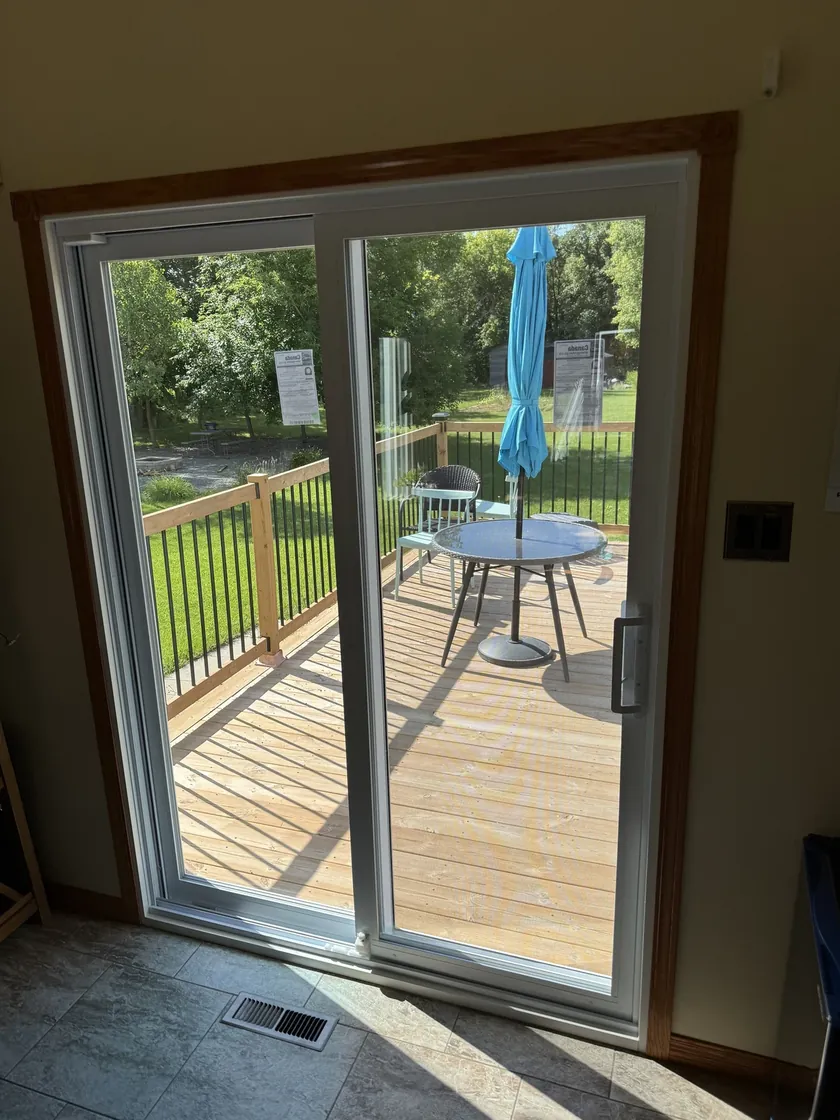
A new door adds locks built for the job. The Novatech 550 sliding patio door we install can be ordered with a double-point lock, a keylock, a security bar and a kick lock. Its glass is tempered. In a new house, BC’s code also requires that a locked sliding panel can’t be lifted out. See our patio doors.
Windows: locks, basement windows and laminated glass
- Casement windows. They crank open from inside and have no handle outside. Our casements have multi-point locks that pull the sash tight to the frame at several points, which leaves little for a pry bar to work on. That only helps if you lock them: an unlocked casement is held by its crank arm alone.
- Sliders and single hung windows. One latch where the two sashes meet does all the work. Ottawa police ask whether windows with a single locking device have “a second security feature,” and Winnipeg police ask whether your sliding windows have security locks. A clamp-on track lock or a cut stick in the track does it. A stop that limits how far the window opens lets you air the house without leaving a person-sized gap.
- Basement windows. They sit at ground level, often behind shrubs or under a deck, and old aluminum sliders are common in Winnipeg basements. Keep the view to them clear, lock them, and add a second lock. If the latch no longer catches, see basement window replacement.
- Upstairs. Lock windows beside a porch roof or garage, and lock up the ladder.
- Laminated glass. Two sheets of glass are bonded to a plastic layer between them. When it breaks, the pieces stay stuck to that layer, so getting through takes time and makes noise. It isn’t unbreakable, and it makes most sense for ground-level glass that’s out of sight. It’s available on our windows.
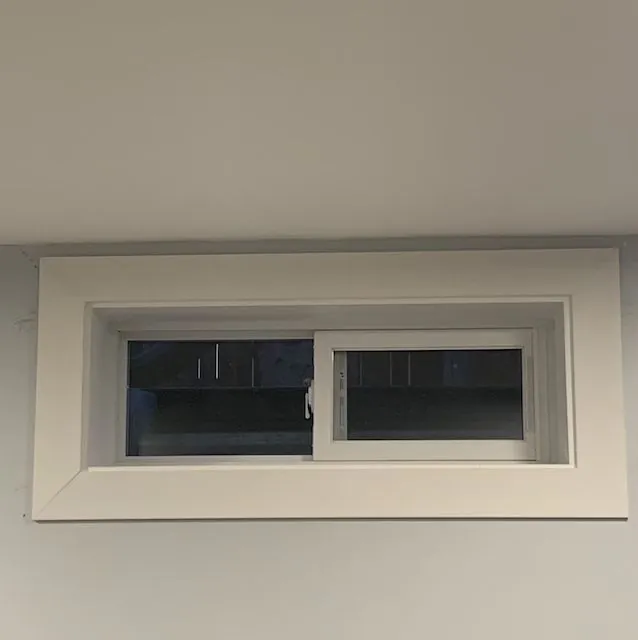
In a new house, BC’s code says windows within 2 m of the ground must meet the forced-entry requirements of the North American window standard. Whoever you buy from, ask whether the window does.
Don’t trade away your escape route
Every fix above has to leave your way out intact. In Winnipeg, a bedroom’s escape window “must open from the inside without the use of tools or special knowledge,” with a clear opening of at least 0.35 m² and no side under 380 mm (City of Winnipeg). So:
- No keyed locks, screws or nails holding a bedroom window shut.
- No fixed bars or grilles over a bedroom window, in the basement or anywhere else.
- A stick in the track is fine, because anyone can lift it out. Show the kids how.
- Keep the opening as big as it is when you replace a bedroom window.
The sizes are in our guide to egress window rules in Manitoba. We replace windows in existing openings. We don’t install egress windows or cut concrete to enlarge one.
Weak points, low-cost fixes and what a new unit adds
| Weak point | Low-cost fix | What a new door or window adds |
|---|---|---|
| Short screws in the strike plate and hinges | Screws at least 2½ inches long, into the wall framing; a four-hole strike plate | A new frame, with an optional 16-inch steel security plate at the lock |
| No deadbolt, or a short one | A deadbolt with a 1-inch throw | A multi-point lock |
| Cracked, soft or loose door frame | None that lasts | Door and frame replaced as one unit |
| Glass beside the lock | Security film; privacy glass or a covering so the lock can’t be seen | A sidelite on the hinge side, or glass set high in the door |
| Patio door that lifts out | Screws in the top track | A new door with tempered glass. Ask to be shown that the locked panel can’t be lifted |
| Patio door with one small latch | A hockey stick or security bar in the bottom track | Novatech 550 options: double-point lock, keylock, security bar, kick lock |
| Slider or hung window with one latch | A second lock or a stick in the track | Casement windows with multi-point locks |
| Old basement window | Clear the shrubs, lock it, add a second lock | A new window with a lock that works; laminated glass if you want it |
Start with the left-hand fixes. If a door or window is due for replacement anyway, our price calculator gives a ballpark.
The comfort bonus
What makes a door or window hard to force also makes it comfortable. A frame that’s square and solid lets the weatherstripping touch all the way round. A multi-point lock pulls a casement sash or a door tight against its seals, which keeps out wind as well as pry bars. Triple-pane glass also cuts outside noise. If drafts are your main complaint, start with fixes for a drafty front door; for noise, see noise-reducing windows.
Common questions
How do burglars usually get into a house?
Through the easiest opening: an unlocked door or window, a door whose frame gives way at the lock, a sliding door, or a window at ground level. Police describe home break-ins as crimes of opportunity, and the Toronto Police Service says most happen in the daytime when nobody is home.
What is the most secure type of front door?
A steel or solid-core door in a sound frame, with a deadbolt that has at least a 1-inch throw and a strike plate screwed into the wall framing. The frame and the lock matter more than the slab. A multi-point lock and a steel security plate in the frame add more.
Do longer screws in the strike plate really make a door more secure?
Yes. Short screws hold only the thin door jamb, which splits under a kick. Screws 2½ inches or longer reach the wall framing behind it. The Winnipeg and Toronto police services both recommend long screws.
How can I make a sliding patio door more secure?
Put a few screws in the top track so the panel can’t be lifted out, and a security bar or a cut hockey stick in the bottom track so it can’t slide. Check that the latch catches fully. A new door can add a double-point lock, a security bar or a kick lock.
Are casement windows more secure than sliding windows?
Generally, yes. A locked casement is pulled tight to its frame at several points and has no handle outside, so there’s little to pry. A slider relies on one latch where the sashes meet, so give it a second lock or a stick in the track.
Should I put bars on my basement windows?
Not on a bedroom window. In Winnipeg a bedroom’s escape window must open from the inside without tools or special knowledge, and fixed bars block it. A good lock, a second lock and a clear view from the yard are safer choices.
Replacing a door or window with security in mind?
We install insulated steel entry doors in new frames, Novatech 550 sliding patio doors and triple-pane windows in and around Winnipeg, with our own crew. At a free in-home estimate we measure, quote and explain your options, from a security plate at the lock to laminated glass. Book an estimate online or call (204) 202-3434.
Want doors and windows that are harder to force?
Book your estimate